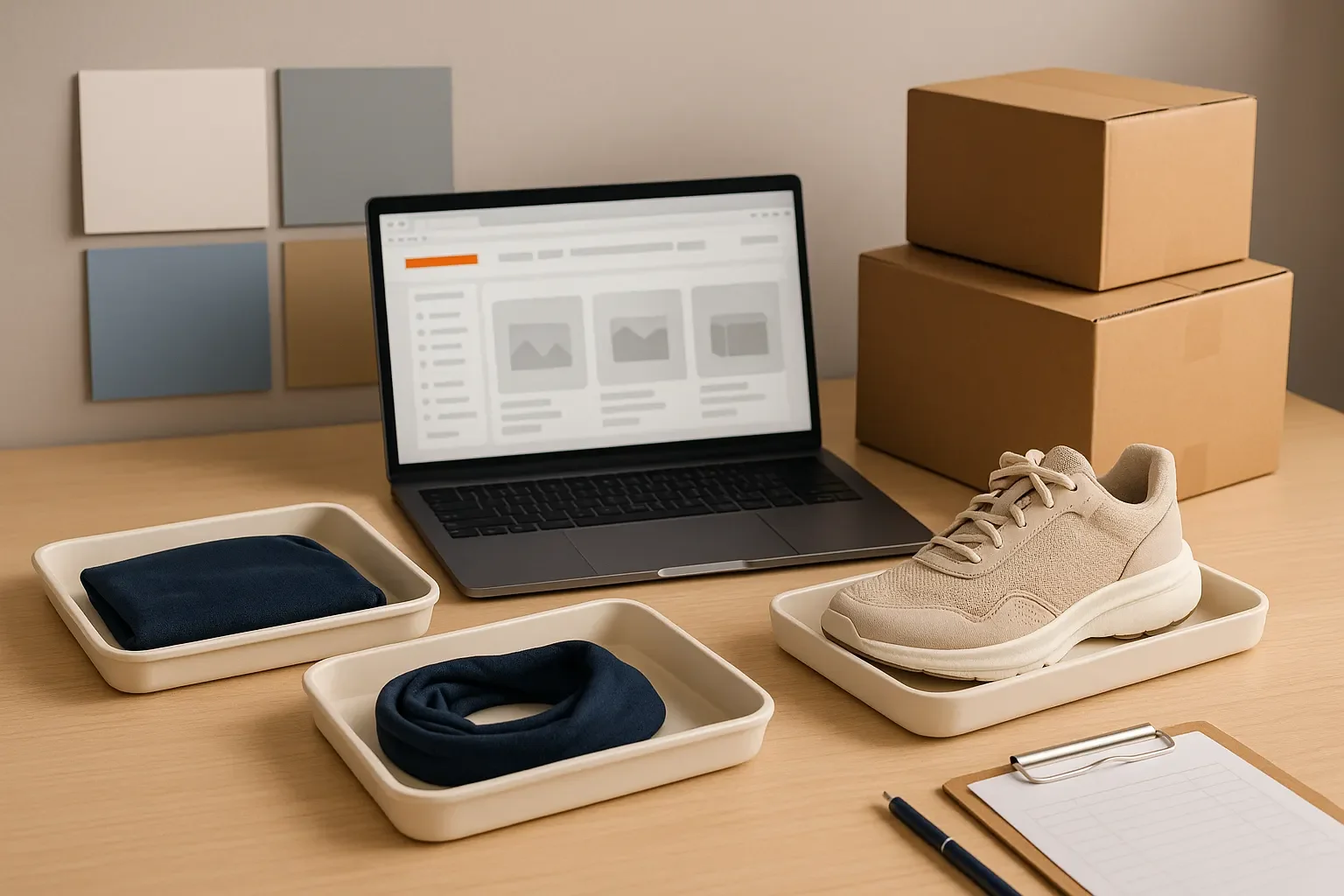
A domestic wholesale listing becomes an export order only after receiving, payment and shipping are arranged.
A 1688 listing shows ¥12.80 per piece at MOQ 300. The price is hard to ignore, and most buyers assume shipping is the hard part. The break usually comes earlier: the listing, the interface, the supplier chat, the delivery address and the payment rails all assume a buyer inside China. Shipping is one of several jobs you have to solve from outside.
This walkthrough follows one order in sequence: listing, China address, RMB payment, language and specifications, written order record, receiving and consolidation, export, and residual risk. At each step, separate what you can do yourself from what a buying agent, warehouse or freight forwarder has to carry. Published sourcing guides and payment-provider terms describe supplier practice and route conditions; they do not replace the checkout page, account eligibility or supplier confirmation in front of you. Check the current steps before you pay.
Read the Listing Before the Checkout Button
1688 is Alibaba's wholesale marketplace for buyers in China. Alibaba.com faces international buyers; 1688 serves buyers inside China. The site, product images and supplier chat are mostly Chinese, which changes what you are able to compare.
A low unit price is only the first landed-cost number. Add domestic transport to a China warehouse, international freight, customs clearance, taxes, inspection, warehousing, payment fees, translation and any sourcing-agent charge. Some of those costs are small on a sample and large on bulk. A listing 30% lower can still lose to a slower, safer route once the whole chain is priced.
Treat a "cross-border supply" badge as a prompt to verify. It marks suppliers set up for international orders, but the item, order type and delivery arrangement still need confirmation. A badge is not a customs broker, an export-document service or a promise that the supplier handles the international leg.
A listing is also not proof that the seller is a factory. The seller may be a manufacturer, a wholesaler, a trading company or another intermediary, so supplier type and capability still need checking.
The Delivery Address Is the First Real Test
Most 1688 suppliers ship only within China. Many sellers on Chinese platforms do not ship internationally at all, and the practical workaround is a China address supplied by a freight forwarder, parcel consolidation company or shopping agent. For a 1688 purchase, that receiving point usually comes before payment.
Ask the supplier to confirm the exact China address, recipient name, phone number and any delivery limit before ordering. An export-friendly-looking listing may still default to domestic delivery. The cross-border marker is a reason to ask a second question, not to skip the first.
A package reaching the right building is not enough. A warehouse may receive many parcels daily, so the shipment has to carry the identifying information or customer reference the warehouse requires. Before dispatch, get the address, recipient, phone number, customer reference and parcel-identification instructions. Do not send to an old address or copy warehouse details from an unrelated order.
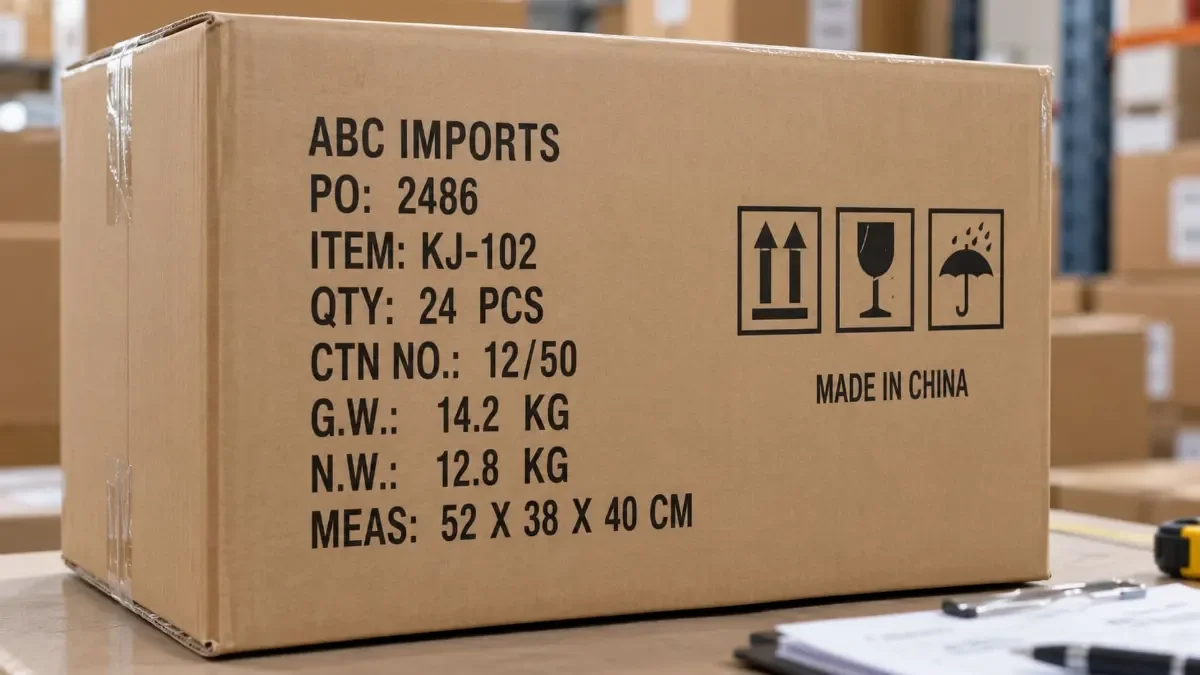
A carton marked with a clear shipping-mark block is what lets a busy receiving warehouse match a parcel to one buyer's order.
Please confirm this order can be delivered to the China address, recipient and phone number below, including any delivery limit, extra charge or parcel customer reference. Do not ship until we confirm the address in writing.
That request settles the domestic leg only, but it gives your goods a destination that can identify them.
Payment: RMB Rails First, Cross-Border Routes With Conditions
1688 settles in Chinese yuan. Reported sourcing guides describe no built-in conversion for USD, EUR, GBP or other currencies, no PayPal integration, and few 1688 suppliers holding PayPal accounts. The familiar rails are Alipay, WeChat Pay and Chinese bank transfers, all in Chinese currency. Alipay verification for 1688 payments usually depends on a mainland Chinese bank card, which most overseas buyers do not hold. WeChat Pay is common among domestic buyers and easy for suppliers to accept, but it assumes a Chinese bank account behind it. One guide sums up direct buying as language barriers, limited payment methods and no international shipping.
Overseas routes exist, with conditions. Read the table as descriptions to verify, not as a rate card.
| Route | Reported position | Verify |
|---|---|---|
| World Pay / 1688 Cross-border Pay, per WorldFirst | Cross-border route; pay CNY or CNH from a multi-currency account without a Chinese bank account | Supplier, item and order eligibility; fees, limits and documents; a verified Alipay account to link the 1688 ID |
| Kuajingbao / KJB | Reported official solution for companies registered in nine jurisdictions as of 2026; one guide says the US, UK, most of Europe, Pakistan, Africa and the Middle East are excluded | Current eligibility and product coverage |
| International Visa or MasterCard | One guide: card option may appear outside mainland, with a 3% platform fee over RMB 200 and 4% to 6% total after issuer charges; another: bare foreign card usually declined; WorldFirst: no built-in international-card or foreign-bank-account option | Checkout, issuer fee and refund route |
| Direct RMB transfer via Wise, Paysend or similar | Workable, usually one to three business days | Supplier trust; outside 1688 escrow; wrong details hard to recover |
| Alipay "Pay for You" | Trusted China contact pays from their own Alipay; escrow can remain | Reliable contact and reimbursement; not scalable for high-volume procurement |
| Buying agent | Agent pays the supplier in RMB from its own Alipay or bank account; charges the buyer in an agreed currency | Commission base, exchange rate, refund account and written scope |
WorldFirst describes World Pay as the official cross-border payment solution for 1688 and the only officially authorised way to pay 1688 suppliers from outside China. Its documentation says a buyer can settle in CNY or CNH from a multi-currency business account without a Chinese bank account, but a verified Alipay account is still required to link the 1688 ID. The route is not available for every supplier, item or order type, and the provider describes fees as starting from around 0.8% while saying to confirm current figures.
WorldFirst's supplementary terms add the mechanics. The service lets a buyer pay for goods bought through the holder of an Alipay affiliate account, called an Agent, whose account number the buyer provides. The Agent may be the buyer, the buyer's affiliate or an appointed third party, and the buyer must ensure the Agent's details are correct and complete. If they are not, reclaiming funds is not guaranteed and an administration fee may apply. Payments may face per-transaction limits. The provider may decline or defer a payment and ask for documents verifying identity, address, source of funds or reason for payment. Compliance checks may require cross-border delivery details, such as shipping records from China to the buyer's overseas destination. The provider also says it is not required to verify the authenticity, accuracy or validity of transfer instructions received from 1688.com, and the buyer is responsible for disputes with the Agent.

Before transferring money, compare each route on eligibility, fees and refund control.
Settle payment after the delivery address and the specification are written down. One guide describes 1688 checkout as an Alipay escrow that releases funds only after the buyer confirms receipt. A direct transfer sits outside that escrow and leaves no platform-mediated dispute resolution. Paying through a stranger who acts as a payment agent, or settling in stablecoins, also sits outside platform protection. An official on-platform route leaves a transaction record that can support a dispute.
Language, Specifications, and the Sample You Think You Ordered
The platform, listings and supplier messages are mainly Chinese. Browser translation helps with page text but can miss technical material, dimensions, tolerances, material terms or details embedded in images. A vague translation is not a specification.
One sourcing practitioner describes clients ordering "stainless steel" and receiving "steel with stainless coating" because the Chinese terms were similar and the translation ambiguous. That is one practitioner example, not a prevalence finding. It shows the failure mode: the buyer thought material was settled, while the supplier may have read a different term.
Send the exact product link and chosen variation, not just a screenshot. Include quantity, colour, size, model, material, packaging option and destination. If one link has several variants, name the SKU or option precisely. Ask the supplier to repeat the specification back in writing. Where the order justifies it, approve a sample or written specification before bulk production. Then carry that agreed specification into the single order confirmation described later, instead of leaving it in the chat thread.
Who Carries the Order: Agent, Warehouse, Forwarder
A buying agent helps you buy. A warehouse manages what happens after the supplier ships. A freight forwarder arranges transport. Those are three jobs, even when one provider offers more than one.
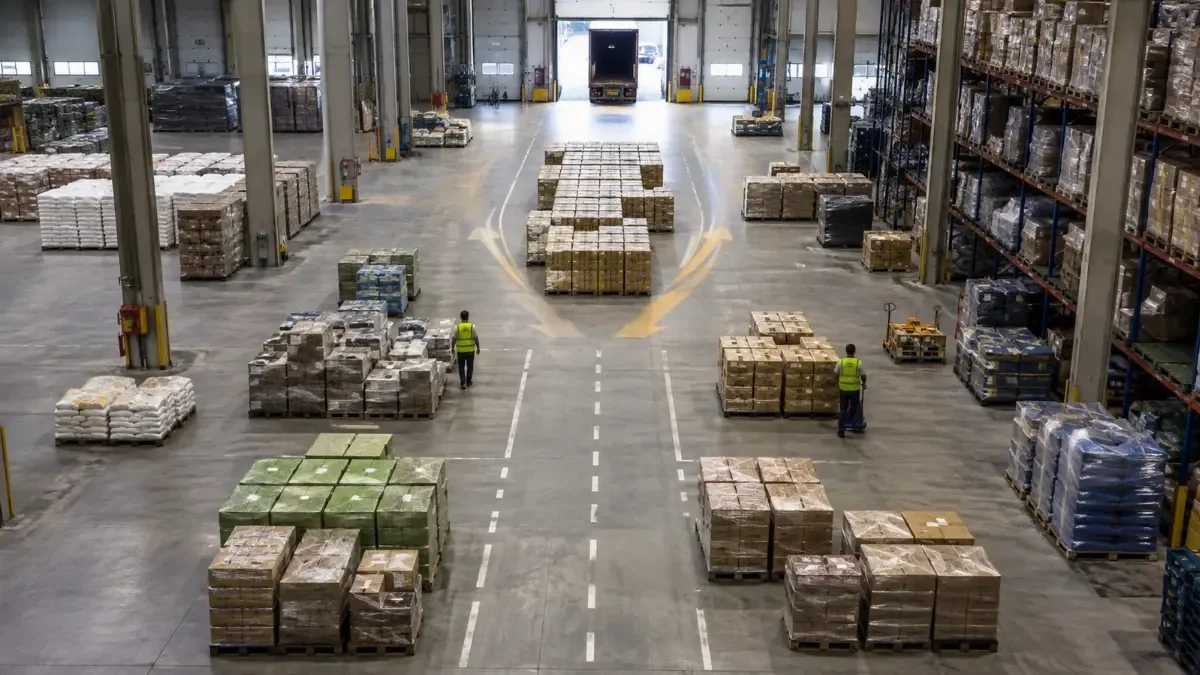
Supplier parcels reach a China warehouse first; the overseas leg is a separate job with its own contract.
| Job | Usually covers | Not automatically |
|---|---|---|
| Buying agent | Placing the 1688 order with a Chinese account, paying the supplier in RMB, supplier communication, tracking the domestic parcel and signing at the warehouse | Laboratory testing, certification verification or formal factory audit |
| China warehouse | Receiving, matching to buyer, counting, checking visible condition, photographing, storing early arrivals, consolidating, repacking and arranging available international shipping | Product design approval, technical compliance or destination customs advice |
| Freight forwarder | Transport and, depending on trade term, destination clearance and duties | Supplier product obligations or warehouse receiving work |
The split depends on the provider. Many consolidation warehouses also offer agent-like services such as placing orders and inspecting goods. A buyer may nominate an existing forwarder in China instead of the agent's international route. One fulfilment centre may combine receiving, inspection, packing and shipping. The names on the invoice matter less than written scope.
The seller and the transport provider may be different businesses with separate contracts. Map the handoffs in writing: 1688 seller to China warehouse, triggered by receiving details and the parcel reference; warehouse to forwarder, triggered by dispatch approval after the arrival check; forwarder to destination clearance, triggered by the agreed trade term and the customs documents. Ask the seller and the forwarder to confirm those handoff points, who arranges each movement and which contract contains the destination service. Name one coordinator and record how dispatch approval is given before any parcel leaves China.
What to Put in Writing Before Money Moves
Request a first-stage quotation that shows China-side costs clearly: product cost, domestic shipping, service fee, payment cost and any separately requested inspection or packaging. An estimated international shipping amount is not a guaranteed final figure before goods are packed.
Identify the payee and confirm currency, exchange rate, service fee and bank or card fees before transferring. Get written answers on whose account receives a supplier refund, how long a refund takes and what dispute process applies. Agree the inspection standard, defect tolerance, return deadlines and who pays domestic return freight.
For a 1688 order, make the fee questions specific:
- Is commission charged on goods only, or on goods plus China domestic delivery?
- Does a minimum apply per supplier order, per supplier, or per consolidated shipment?
- Which supplier costs and third-party charges are separate: payment route, inspection, repacking, domestic return freight?
- Which quantities, hours and days are included, and who approves added work before it starts?
- Who pays for correction, sorting and reinspection if the supplier or warehouse causes a problem?
- What remains payable if you cancel or reduce the order?
Then put the order into one written confirmation. It should tie the chosen listing variation and the supplier's chat answer to the China warehouse reference, the allowed mix, product and packaging specifications, extra charges, stock balances and delivery schedule. Check its total against both the invoice and the purchase order, not only the chat thread. The confirmation should also record domestic return terms and the payment milestone it unlocks.
Confirm in writing: payee and currency; exchange rate and fees; refund recipient and timing; inspection standard and defect tolerance; return deadline and domestic return freight; and the attached order confirmation. I will verify any changed payment detail through your official email before sending funds.
Some provider payment pages tell buyers to verify changed payment details through an official email address before transferring. A chat message with new bank details is not a substitute.
After the Supplier Ships: Receiving, Consolidation, and the Export Leg
Before the supplier ships, get the warehouse receiving details right: address, recipient, phone number, customer reference and parcel identification. Many parcels arrive daily; without the reference, your carton may arrive but never be matched to your order.
Parcels from several suppliers may arrive on different days. If more supplier orders are due, do not ship the first parcel internationally just because it has arrived, or one planned consolidated shipment becomes several separate international ones.
On arrival, compare quantity, model, colour, size, labels and packaging with the order. Photograph or video obvious defects before the seller's return deadline. Skipping the arrival check can mean an obvious problem is found only after international shipping, when fewer options remain. Warehouse receiving is not full inspection. Technical testing, laboratory checks, certification verification and formal factory audits are separate services and not automatically included.
Export documentation is not automatic either. 1688 suppliers do not automatically provide commercial invoices, packing lists or certificates of origin formatted for international customs. Missing documents can leave a shipment stuck at customs, so ask who prepares what and get it in writing before cargo leaves China.
The trade term decides who does the destination work. If the quote says DDP, the seller side handles import clearance and bears applicable import duties and taxes; if it says DAP, you handle import clearance and those charges. Tie that allocation to the document gap: confirm which provider supplies the commercial invoice and packing list, which one performs destination clearance, and who is exporter of record. The published guides do not settle how the export declaration duty for a 1688 purchase splits between an agent and a forwarder, so resolve it with your providers before shipping rather than discovering the gap when customs asks.
The Risks That Remain, and When the Agent Fee Is Worth It
Most risk mechanics are visible in the chain. A direct RMB transfer or crypto settlement can bypass platform escrow. Wrong payment details can be hard to recover. Translation can change a material specification. A bulk order may not match the sample. Export documents may be missing. Branded or brand-adjacent goods can raise intellectual-property risk, because 1688 polices IP less aggressively than Alibaba's export-facing site. Warehouse mistakes compound after arrival when receiving instructions, customer references or arrival checks are skipped.
One sourcing practitioner reports two problem orders in hundreds: a quality issue where the product did not match the sample, and a communication breakdown that produced wrong specifications. That is one practitioner's experience, not a failure rate or proof of how often these problems occur.
Self-managed buying may fit a repeat buyer who can find the product, choose the variation, communicate with the supplier, place the order, pay successfully and arrange a China receiving point. A warehouse-only workflow can fit when the main gap is receiving, checking, holding, consolidating, repacking and shipping after suppliers dispatch.
A buying agent is more likely to earn the fee on a first order, a multi-supplier order, a customised product, a payment setup that keeps failing, or a buyer who cannot manage Chinese-language specifications. Commission is reported at roughly 3% to 10% of product cost in one guide and 3% to 8% in another, with one guide estimating total costs 15% to 25% above direct procurement. Those are reported ranges, not current price quotes. Compare written scope, not the headline commission.
If payment, address, specification, refund control or export responsibility is still vague, do not pay yet. Add the missing service or move the order to a provider who will put it in writing.
Work one listing through in order: confirm a named China address, check payment eligibility and refund control, request a quotation and one order confirmation, then decide whether you need an agent, a warehouse and a forwarder, or all three. If a link is still unclear, leave the money where it is.