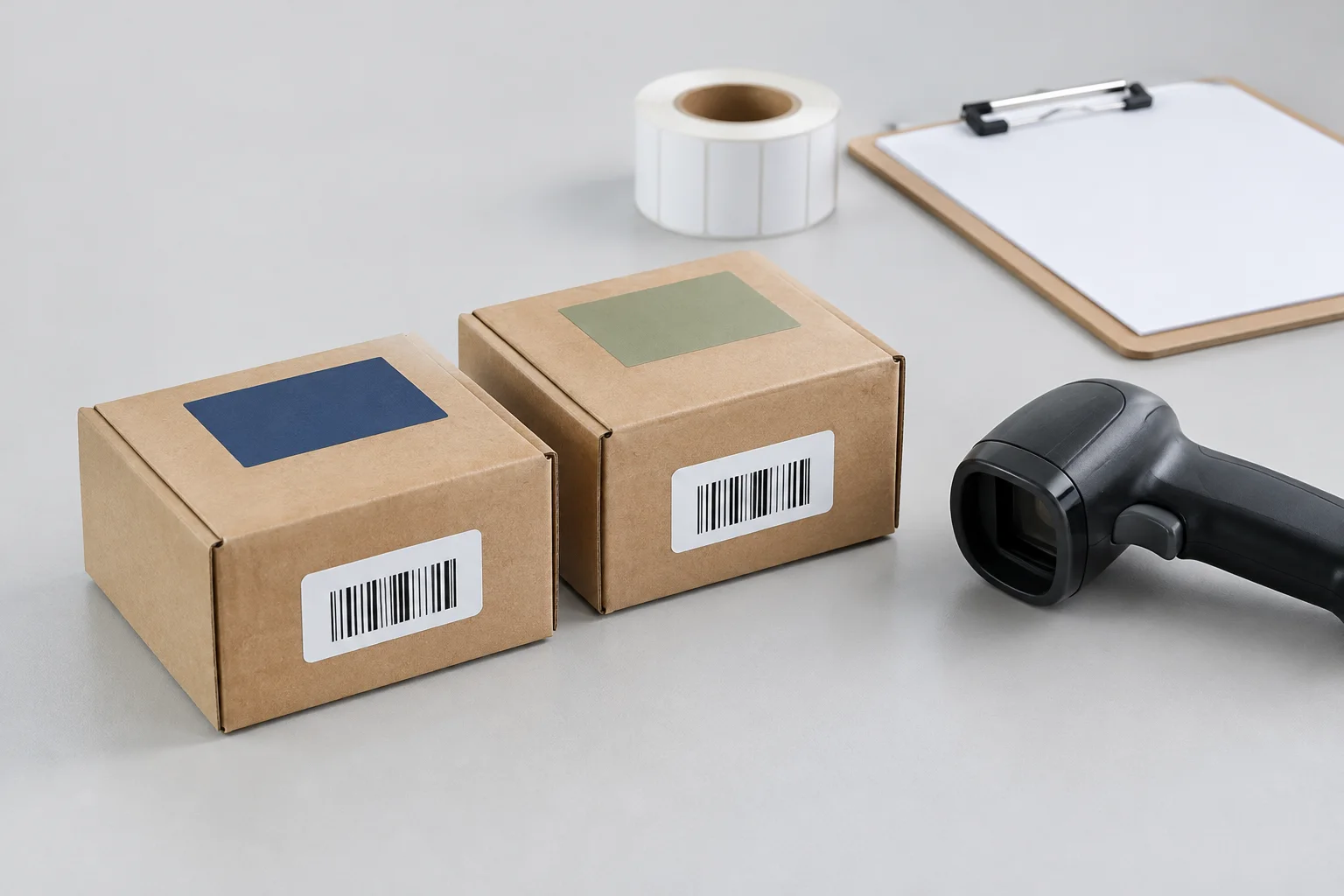
A supplier sends a photograph of a neat barcode label and asks for permission to pack the order. Before approving it, ask for the decoded value and check which product is inside the package. A readable label can still identify the wrong color, size or sales unit.
For an order sourced in China, put the approved label file, the product-to-code mapping and the physical packaging check into the packing instructions. Check these before the supplier seals the export cartons, when labels are easier to correct.
Give the supplier one approved mapping
Ask the receiving warehouse or sales channel which identifier and label format it expects. A retail product code, an internal stock code and a shipment label serve different purposes. Keep their files separate and identify where each belongs.
Prepare one row for each sellable variant. Include the buyer SKU, a clear product description, color or size, units in the sales pack, expected decoded value, approved artwork filename and revision. Store code values as text so a spreadsheet does not drop leading zeros. Have the receiver confirm how its system represents those values before agreeing the comparison rule.
Send the actual print file with this mapping. A screenshot in a chat can lose resolution or omit the file revision. Name the person who approves revisions, and tell the supplier which old files are withdrawn. Keep this instruction with the product specification.
Approve a label on the finished package
Ask for a print sample made with the intended label material and printer settings, applied to the package in the position proposed for production. Include the final outer wrap if the receiver will scan through it. Request a close photograph plus a wider view showing the whole package.
GS1's barcode quality guidance identifies clear margins, contrast, symbol dimensions, damage and packaging obstruction as things to check. Use the applicable symbol and receiver requirements for dimensions; there is no single label size suitable for every code and application.
A label that sits flat on an empty bag may wrinkle after the product is inserted. Check the packed version. If the printer scales the artwork or the supplier changes the label stock, request a new sample before continuing.
Record what the scan actually returns
Imagine a hypothetical order of blue and green storage pouches. The supplier accidentally applies the blue variant's label to both. A scanner may read every label successfully, while the warehouse records green goods as blue stock. The scan result has to be compared with the approved mapping and the item in that package.
For each variant and sales-pack configuration, record:
- The SKU and actual contents, including whether the unit is a single item or a set.
- The expected value and the decoded value, with any agreed system formatting made explicit.
- The sample and artwork revision, package condition and scanning device used.
- The result, any discrepancy and the person responsible for resolving it.
A phone app reading one sample is useful preliminary evidence. It does not establish a formal print-quality grade or show that the receiver's equipment will accept the batch. Where a receiver requires a verification report, arrange it against its stated criteria. GS1's 1D barcode verification guideline describes a process using suitable verification equipment and trained staff, with finished packaged samples preferred for assessment.
Control the labels when production switches variants
Agree how the packing team will remove the previous variant's unused labels and confirm the next print file before changing products. Approve a first packed unit after the change. Keep label rolls and work-in-progress goods identified so partly used materials do not return to the wrong job.
Put barcode and product-matching checks into the inspection scope before the visit. Agree the sampling approach and coverage of variants, packing lines and print runs with the buyer and inspector. A photograph of one approved sample does not describe checks on the rest of the batch.
If a mismatch appears, hold the affected goods and trace which units were packed with that label file or roll. Expand checks as needed to establish the affected quantity. Replacing the label on the failed sample alone leaves the remaining stock unresolved. Before relabeling, agree the correction method with the receiver so obsolete codes do not remain confusingly readable and required product information stays visible. Record corrected quantities and check the corrected goods again.
Send a handover the warehouse can use
Give the receiver the approved SKU mapping, label revision and check results, including any held or corrected goods. Keep sale-unit identification separate from the carton references and packing list. If a consolidation team opens or repacks products, specify who rechecks any label affected by that work.
For help coordinating labels and packing with Chinese suppliers, send Surmount your product details together with the receiver's instructions, SKU list and current artwork. State whether you need a document review, physical scan checks or formal verification so the scope can be agreed before packing starts.