
Before the deposit goes out: the printed invoice paperwork and calculator on the desk.
Take a hypothetical first order, not a client case: the quotation lands in your inbox at USD 18,400 all-in, deposit 30% to start production. The agent replies within the hour, the price looks reasonable, and the natural next move is to wire the deposit today.
Hold the wire. Before the money moves, check which written terms you already hold. You need order-level documents that separate the money, name who is responsible for defects and refunds, and define the claim path. A general policy page or a good sales call does not replace them.
What follows is a pre-payment checklist in the order you make the decisions: separate the money, check who pays the agent, read the order-confirmation documents, pin down refund and replacement terms, define inspection and claim evidence, then confirm payment protection. One boundary up front: this is practical guidance, not legal advice, and every clause example below is hypothetical template wording to adapt and review for your own deal.
Separate the money first: which amount is actually in dispute
Any refund conversation starts with one question: which pot of money are we talking about? A China sourcing project can contain several distinct amounts: the supplier's goods price, the agent's service fee or commission, transport and insurance, inspection charges, bank costs and other third-party expenses. Track them separately.
A bundled quote hides exactly this. Say an agent quotes USD 12,000 all-in for 1,000 storage boxes; these figures are made up for demonstration, not market rates. Inside that number sit USD 8,500 of goods, USD 900 of service fee, USD 600 of inland freight and inspection, and USD 2,000 of other costs. Now 200 boxes arrive with cracked lids. If the quote is bundled, the refund talk is about the whole USD 12,000; if it is broken out, the claim is about USD 1,700 of goods value (200 ÷ 1,000 × 8,500) and the rest of the file stays closed. A clear dispute or claim starts by identifying which of these amounts is actually in question.
Before you compare agents, ask for the breakdown and get it into the quotation: clear service charges, product quotes with details, and a cost breakdown covering sampling, molding, testing, bulk order, packaging and shipping.
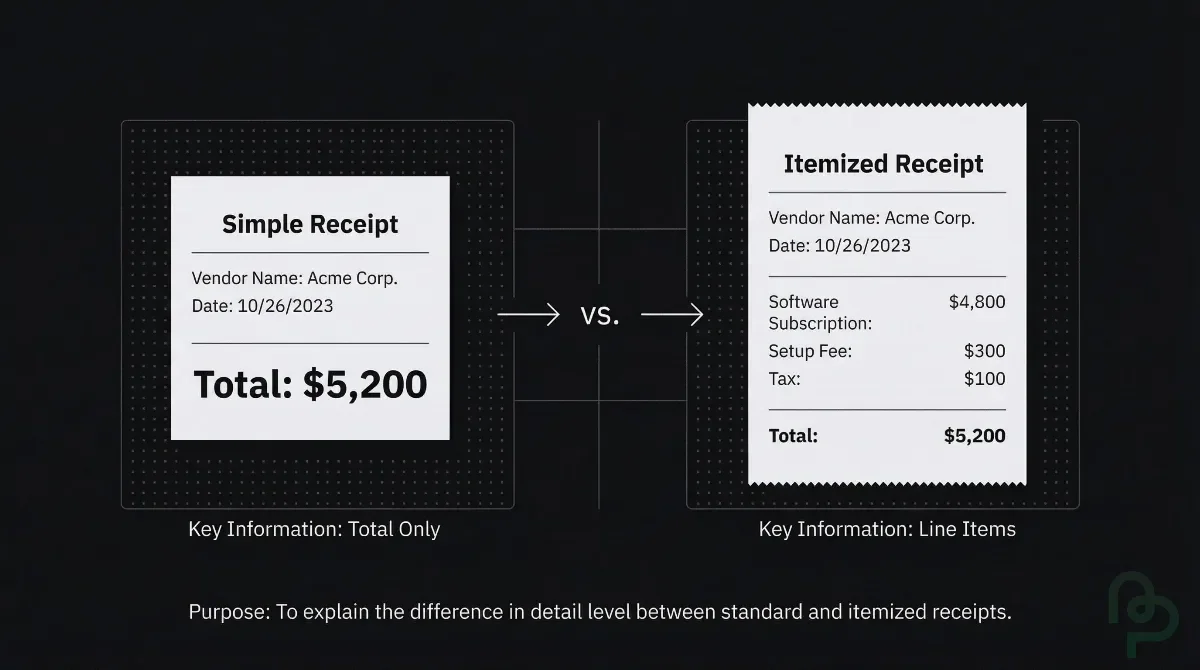
A comparison diagram showing a total-only receipt beside a receipt with each charge on its own line, both adding up to the same total.
Keep the quotation, pro forma invoice, purchase order and payment records together as one document set for the order; that file is what any later claim will be read against. Treat published commission figures as claims, not standards. One sourcing-agency guide describes percentage-based pay as usually anywhere between one and five percent of the order value. Verify the number with your specific agent rather than quoting a range back at them.
Who pays the agent, and what that means for the written terms
Fee structures create incentives, and incentives show up in the wording of your agreement. In practice the models come down to three: a flat service fee, a percentage of order value, or per-service fees for audits, inspections and freight.
The direction of the payment matters more than the percentage. An agent paid by the factory has an incentive to favour that factory, while a client-paid agent's incentive is the buyer's successful delivery.
Some providers describe the remaining risk bluntly: some sourcing agents route payments from buyer to supplier through themselves and add a blind markup at each stage of payment. A verbal promise does not settle it either. Without a transparent sourcing process fully accountable to the client, it is impossible to verify an agent's claim that it does not accept commissions or kickbacks. These are sourcing-agent providers describing their own industry, not measured market frequency. The practical move is to put the fee model and the payment routing in writing instead of accepting an assurance.
Before the deposit, get the answers in writing. Ask what work is included, what evidence will be provided, who updates changes, and who is responsible when quality, packaging or logistics problems appear.
The order confirmation: what the project documents must identify before a deposit
The project documents read before paying should identify the supplier, products, quantities, price, production timeline, inspection conditions, responsibilities, warranty, claim procedure and any replacement or refund conditions.
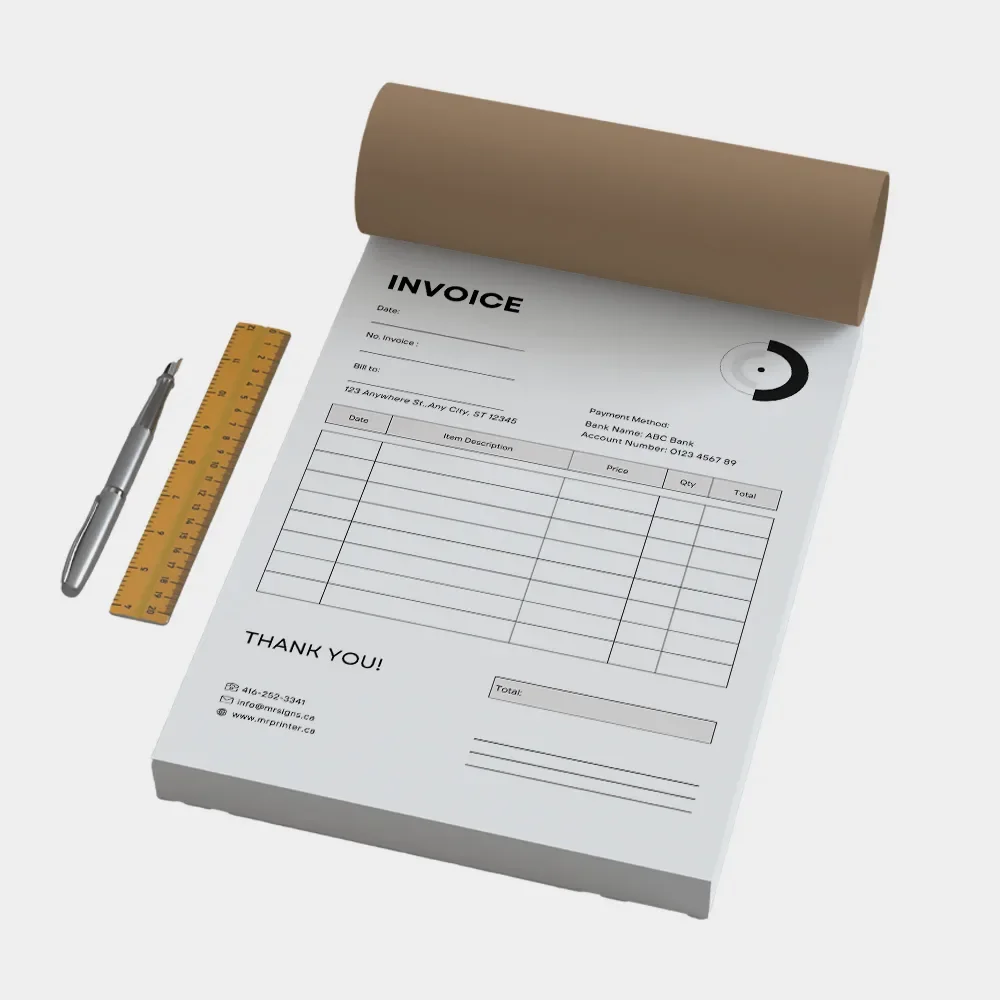
A printed invoice sheet with line items and totals — one document of the set to check before any deposit is released.
A general policy cannot replace the documents for a specific order. A policy page answers what usually happens; your order documents answer what happens to this container. Raise questions or disagreements before approving the order and before payment.
Before approving payment, confirm the supplier name and bank details, and confirm Incoterms, transport responsibility and cargo insurance where relevant.
Specifications deserve their own line, because vague wording is where conformity claims die. Write measurable specifications instead of relying on 'good quality'. Keep approved samples, drawings, measurements and packaging requirements with the order file, and reference them in the order confirmation so both sides check the same version.
Money timing belongs to the same document set. Deposit and payment terms should be confirmed in writing with the quotation, before any work starts. And note how long your price is good for. A quotation's validity period should be noted because raw-material prices fluctuate and a quote may only be firm for 15-30 days.
| Document | What to confirm in writing | What it protects |
|---|---|---|
| Quotation + cost breakdown | each amount on its own line; validity period | knowing which line a refund applies to |
| Order confirmation / pro forma invoice | supplier, products, quantities, price, timeline | proof of what was actually ordered |
| Specification pack | measurable specs, approved samples, packaging | the conformity test in any claim |
| Inspection terms | method, sample, defect limits, response to findings | inspection evidence you can use |
| Refund and replacement clause | what is refundable, who replaces, who reworks | the claim path itself |
| Payment terms | deposit share, milestones, bank details, Incoterms | the money flow and who holds it |
Template: copy-ready pre-payment request. This is a template. Replace every bracketed item with your own product and terms, and have the wording reviewed for your own deal before you send it.
Before we release the deposit, please confirm in writing:
- A cost breakdown separating goods, service fee or commission, inspection, inland freight and third-party charges.
- Supplier legal name and bank details, Incoterms, transport responsibility and cargo insurance.
- Which amounts are refundable if production does not start, and which fee portions are earned at which milestone.
- Who handles replacement, rework, credit or compensation for missing versus defective goods.
- Inspection method, sample size, defect limits and the response to findings.
- The evidence required for a claim, and the deadline to report an issue after receipt.
Refund terms: what can be refunded, and what is already earned
Check the exact refund and claim terms before approving the order. This is the single clause to read before money moves, and it usually has two halves that behave very differently.
Half one: the goods. One provider's published policy puts it plainly: money paid for the goods is not automatically the agent's revenue. Under the same policy, amounts recovered from a supplier are returned to the client under the project terms, subject to justified bank, currency or other applicable charges. Treat both lines as one provider's stated policy. Your own documents must say the same before you rely on them.
Half two: the work. A supplier refund does not automatically refund sourcing work already completed, such as supplier research, negotiation, visits, document checks or order coordination. That is exactly why the fee schedule needs milestones. Whether a service fee can be refunded depends on the service, how far it was performed and the applicable quotation or contract.
Illustration (hypothetical; example figures, not a market standard). You cancel a 1,000-unit order after the sample is approved and the bulk PO is placed. The supplier returns the goods deposit, but supplier research, negotiation, sample rounds and PO coordination are already done. Under a milestone schedule, that portion of the service fee is earned. So before the deposit, ask which milestones make which fee portions earned and non-refundable, and get the answer into the quotation or contract.
There is no verified market standard for agent deposit percentages or fee-refund schedules. Any number in front of you is one provider's pricing, not an industry rule. Work from your own quotation.
Replacement, rework and sorting cost: name who pays before it happens
The written terms should confirm which party handles replacement, rework, credit or compensation. Put that sentence in before the deposit; it is much harder to negotiate after a defect is found.
Start from where responsibility normally sits. Unless the contract says otherwise, the supplier or manufacturer remains responsible for manufacturing and for conformity with the order, technical specifications, approved samples and agreed conditions. Read that as one sourcing provider's policy framing, not a universal legal rule. Your contract is what governs your order.
Keep the roles distinct. An agent acting as sourcing provider, commercial intermediary or coordinator does not automatically become the manufacturer. If a separate inspection or quality-control service is purchased, its responsibility is defined by the scope agreed for that service.
In the clause wording, treat two problems as two claim paths. Missing goods is a quantity or packing-list mismatch: the claim is about counts and cartons, and you would normally request shipment of the shortfall or a credit. Defective goods is a conformity problem against specs, samples or agreed conditions, and the remedy to name is replacement, rework, credit or compensation. Worked cost examples for who pays sorting or rework labour on either path are hard to verify, so agree the allocation in your own words instead of assuming a market default.
Template: replacement and rework clause. This is sample wording, not enforceable legal language. Adapt it with your agent and review it for your own deal.
If delivered goods are missing against the packing list, or defective against the approved specification and sample, [supplier / agent] will [replace / rework / issue credit] at their cost within [X] days of an accepted claim. Sorting, reinspection and rework labour costs are borne by [party]. Claims must be reported within [Y] days of receipt, with [photographs, inspection report, affected quantity].
Practical step: write measurable specifications, keep approved samples and packaging requirements in the order file, and confirm the remedy route in writing before the deposit.
Inspection scope and claim evidence: write this before the inspection visit
If the inspection scope is vague, the claim clause above has nothing to stand on. The inspection method, sample, defect limits and response to findings should be defined before the inspection visit.
An inspection can reduce uncertainty before shipment, but it is not an absolute guarantee against hidden defects or problems outside the agreed scope. Passing one check does not answer the next question. A carton count does not verify a material spec.
Agree the evidence list at the same time as the refund clause, so nobody argues about proof after the container is gone. A useful claim may require photographs, videos, inspection reports, product references, affected quantities and transport documents as evidence.
And set expectations on outcomes. A claim is not automatically accepted: the outcome depends on the contract, the evidence, the nature of the problem and the supplier's obligations.
Evidence checklist to agree in writing before the deposit:
- photographs and video of the issue and the packaging;
- the inspection report or QC record for the affected batch;
- the product reference: approved sample, drawing or spec version;
- affected quantity, by SKU and by carton;
- transport documents (packing list, Bill of Lading copy) for the shipment.
When something does go wrong, move fast: report the issue promptly, preserve packaging and shipping records, separate manufacturing defects from transport damage, and describe the affected quantity and the remedy you are requesting.
Payment protection and the final pre-payment checks
Last, the payment mechanics. For supplier orders the reference point is different. Common supplier payment terms are a 30% deposit with the balance paid before shipment, against a copy of the Bill of Lading. That figure comes from supplier payment-terms guidance, not from agent service contracts. Your agent's deposit schedule is a separate question to settle in writing.
Where a platform route is available, payment protection mechanisms such as escrow or Trade Assurance exist to help ensure both parties meet their obligations. Platform terms vary. Fees, per-payment limits and dispute rules belong to the route you actually use, so confirm them in writing for your own payment path instead of assuming one platform's terms.
And budget the transfer itself. Ask which payment methods are accepted and what each one costs, because those fees can add up, especially on smaller orders.
Final checks before the deposit:
- supplier name and bank details confirmed in writing;
- Incoterms, transport responsibility and cargo insurance confirmed;
- refund and claim terms read line by line, with fee milestones marked;
- replacement, rework and sorting responsibility named for missing versus defective goods;
- inspection scope and evidence list agreed;
- quotation validity and payment-method fees understood.
Template: the pre-payment request you can send today. Adapt every bracketed item before sending.
Subject: Written confirmations before deposit (ref [product / PO number]) Before we release the deposit, please reply in writing confirming: (1) the cost breakdown by line; (2) supplier name and bank details, Incoterms and cargo insurance; (3) deposit, milestones and which fee portions are non-refundable; (4) who handles replacement, rework and sorting costs for missing versus defective goods; (5) inspection method, defect limits and claim evidence; (6) quotation validity and accepted payment methods with their fees.
Dispute-resolution clauses, governing law and enforceability are legal questions this checklist does not answer. Have the agreement reviewed where the order value justifies it.
Next step
Before the deposit goes out, put the cost breakdown, the order confirmation, the refund and replacement terms, the inspection scope and the evidence list into one document set, then send the checklist above to your agent or your own team for written confirmation. Adapt the clause wording to your order, and get it reviewed where the stakes call for it.
Still comparing partners first? Our guides on comparing supplier quotations and checking a supplier before ordering cover the two steps that come before this one.