A robot vacuum can finish a convincing demonstration and still leave an importer with unanswered questions. Can a customer install its app in the destination country? Which replacement filter fits the exact version being ordered? Who handles a unit that charges normally but will not connect after an update?
The answers affect what you can promise under your own brand, what your support team must learn and which costs remain after the first shipment arrives. Put them in the sourcing brief before you request comparable offers.
The Canton Fair's October 2026 activity programme lists service robot releases on October 15 and 16, alongside smart living appliances. The programme shows current exhibition attention; consumer demand and expected margins need their own research. If you are considering a private-label robot vacuum from China, evaluate the complete product and support package before choosing a model.
Define the version you are actually buying
Start with a configuration sheet that identifies the robot, dock and accessories together. Record the manufacturer's model code and the version proposed for your destination. Add the app name, firmware identification, charging arrangement, included consumables and manual language. Keep the supplier's model identity even if your retail model name will be different.
A quotation should explain what customization changes. Printing a logo on an existing housing, changing packaging and commissioning an app under your brand are separate scopes. Ask which supplier controls each change, what requires a development charge and whether the sample represents the proposed production version.
Two offers with similar photographs may include different docks or accessory packs. Ask for a contents list and photographs of the exact set. If one offer includes a charging dock and another includes an automatic emptying station, price and servicing questions need to reflect that difference. Do not leave the word "station" undefined.
For each claimed feature, distinguish what is included now from an option or a planned update. A roadmap entry is a different commitment from a function demonstrated on the sample. Our private label and white label guide explains how the extent of customization changes the work a buyer must arrange.
Test the app as a new customer would
Request the exact download links and supported destinations, languages and phone operating systems. Ask a tester in the intended market to install the public app and set up the sample using a new account. Document the steps that require help from the supplier. A demonstration on a salesperson's already connected phone leaves this part of the product unevaluated.
Connectivity requirements can differ by model. For example, iRobot's setup documentation distinguishes app generations and lists different Wi-Fi support across its robots. This is a named manufacturer's example, not a specification for your supplier's product. Request the corresponding information for the model you intend to order.
Build a function list with separate columns for on-device controls, app operation and any external service dependency. Check the functions you intend to advertise under the conditions your customers will encounter. Record what remains usable without an internet connection, and have the supplier confirm the result. Avoid assuming that every advertised function works offline.
Include the return and resale process. Ask how an owner removes an account and how a new owner pairs the same unit. iRobot's reset guidance distinguishes restarting from a factory reset and describes account and data removal. Your supplier needs its own documented procedure; a reset instruction should clearly state what it deletes.
Also define who maintains the app and firmware, who answers a connectivity fault and how long updates are planned. Roborock publishes a software security support policy with product-specific information. That is an example of a question a buyer can ask, not a support period that automatically applies to other brands. Put your supplier's proposed scope and charges in writing.
Turn cleaning claims into a sample evaluation
Write down the job the customer needs done. A distributor targeting homes with rugs may prioritize different observations from a seller focused on hard floors. Identify the relevant floor surfaces, room layout and maintenance tasks before deciding which catalogue numbers deserve the most attention.
Ask suppliers how they measured the performance figures they quote. A suction figure without a measurement method does not describe everything in a cleaning cycle. Treat coverage, pickup, edge cleaning, return to dock and user maintenance as separate observations. Only make comparative claims when the evidence supports the comparison.
Create a repeatable evaluation plan for the candidate samples. Keep the starting conditions and settings recorded, use the same defined tasks and note any manual intervention. Include the selected mop and station functions only when they belong to the configuration being considered. This is a buyer's evaluation plan, not a substitute for applicable laboratory testing.
Observe what happens after cleaning as well. Can a user remove the dustbin, clean accessible parts and reinstall them by following the manual? Are the relevant error messages understandable in the intended language? A sample review should capture the work the customer will have to repeat, alongside the machine's cleaning result.
Agree how you will judge the observations before you compare suppliers. Otherwise, a strong demonstration in one area can distract from a requirement that another model handles better. Our product sample evaluation guide covers how to keep sample identity and acceptance decisions connected.
Order the consumables and after-sales plan too
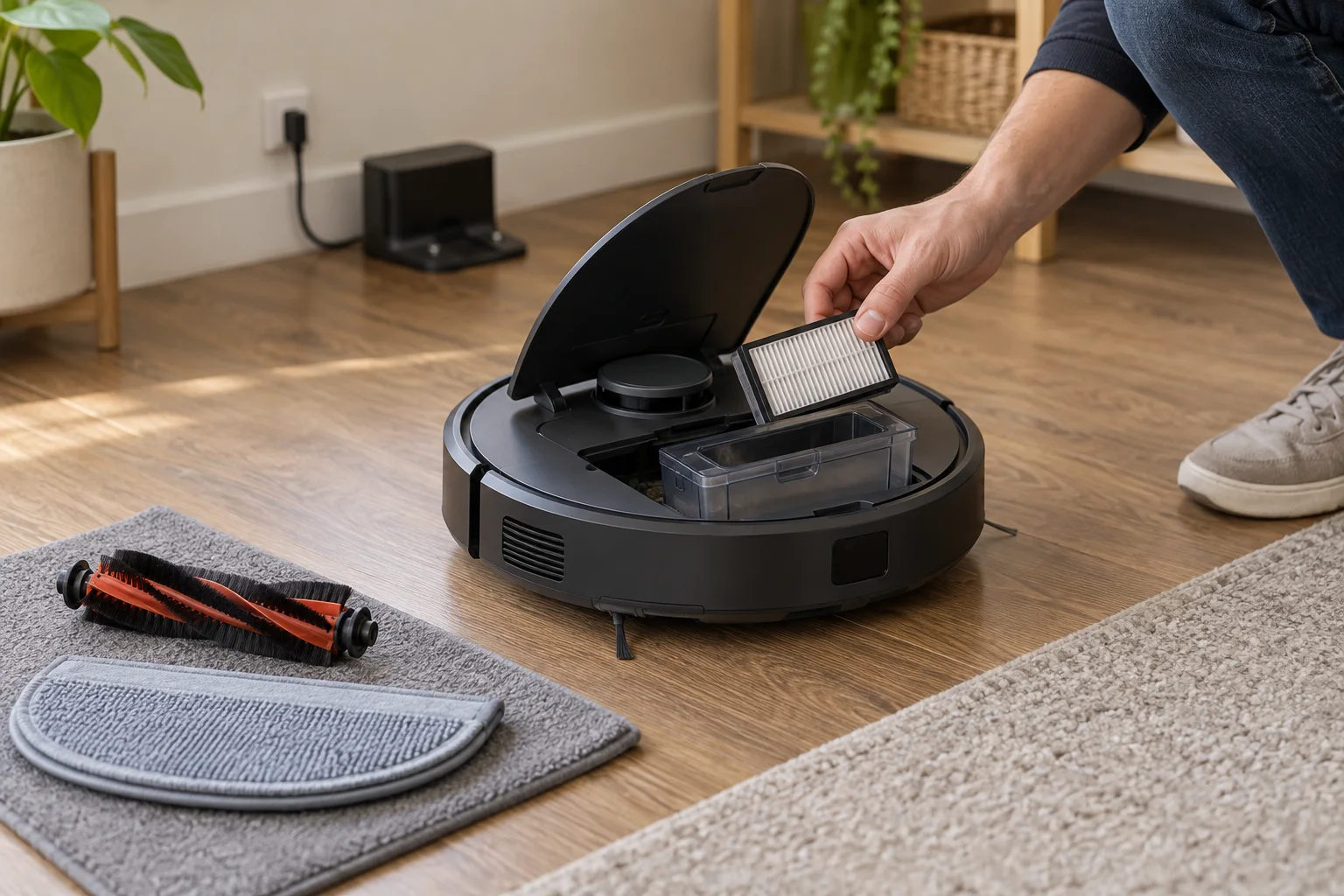
Request a parts list tied to the exact model revision. Include the replaceable items the customer is expected to use, such as the specified filter, roller brush and mop pad. Where the configuration uses a station consumable, identify that separately. Similar appearance is insufficient evidence that a replacement fits.
Ask for samples of replacement consumables and check them against the approved robot. Confirm item codes, pack quantities, minimum orders and lead times. Ask whether these parts will remain available if the supplier changes the main model. A proposed availability period should be an explicit commitment, with a process for notifying you of changes.
Separate routine customer maintenance from servicing that needs trained personnel. Your support plan should say what evidence a customer must provide, who diagnoses the issue and when a replacement or authorized repair is appropriate. It should also identify who pays for the proposed remedy and how the supplier will support a fault that cannot be resolved remotely.
Price this support arrangement while comparing quotations. A spare-parts allowance, replacement units and technical assistance are different provisions. Confirm their scope and exclusions instead of treating a warranty headline as a complete cost agreement. Do not assume your supplier's warranty and your commitments to retail customers are the same arrangement.
Ask which app, cloud or branding services have recurring charges, how those charges are calculated and what happens at renewal or termination. Request an escalation contact for software problems as well as a contact for physical parts.
Send suppliers a brief that exposes the gaps
Use a request that lets a supplier answer precisely. The following is an inquiry example for a buyer evaluating a private-label model; it does not describe a Surmount customer order or a robot we have tested.
We are evaluating a robot vacuum for our own brand in the stated destination market. Please quote the exact robot and dock configuration, identify the manufacturer's model and revision, and list the included accessories.
Please confirm the public app, supported countries and languages, setup requirements, offline functions, update support and any recurring service charges. Identify the entity responsible for the app and firmware.
Please provide the matching consumables list, sample availability, replacement-part terms and proposed after-sales responsibilities. Separate current functions from optional customization or planned updates.
Attach your intended use and evaluation requirements. Ask the supplier to mark each answer as confirmed, conditional or not included. A specific unanswered item is easier to resolve than a general assurance that the model is suitable for export.
Keep product and market review separate from a sales presentation. Arrange the relevant technical and destination-market assessment for the exact robot, dock and configuration. Request the documents needed for that review rather than assuming a catalogue badge establishes that your branded set is ready to sell.
Use a pilot order to decide whether to scale
Choose a pilot quantity that fits the evaluation and sales plan agreed with the supplier. Before it starts, link the approved hardware version, app and firmware references, accessory list and packaging files to the order. Define which changes need your written approval, including changes to a service provider or replacement part.
The pilot review should cover the customer journey as well as the carton contents. Check that the supplied instructions lead to the correct app, that a fresh setup follows the documented process and that the included parts match the order. Include the agreed functional checks and record the limitations of the review.
Establish decisions for problems before delivery. An unresolved destination setup issue, missing support ownership or an unconfirmed replacement consumable is a reason to hold the affected decision open. Ask the supplier for a corrective action and evidence that it addresses the issue before increasing the order.
Record the pilot's actual support workload and the cost of the remedies used. Those observations help you revisit the landed product economics with more information than a unit quotation provides. Keep forecasts separate from measured results; a small pilot does not establish a long-term failure rate.
Surmount Sourcing can help coordinate supplier matching, sample requirements, quality checks and logistics in China. If you are evaluating a private-label robot vacuum, send your destination market and proposed configuration, together with your app and support questions. That gives the sourcing discussion a defined scope before suppliers prepare their offers.