Before you transfer the deposit, confirm who you are actually dealing with.
Supplier says: "We are the factory." The deposit invoice is already in your inbox. Before you pay, you have one decision to make: are you dealing with the manufacturer or a trading company, and does it matter for this order? This guide walks through the evidence to collect in order: registration documents, capability questions, a live video call, and a written brief you can send today, and flags what each check does not answer.
Ask the question first, then decide what evidence you need
Experienced buyers always ask: "Are you the manufacturer or a trading company?" Both have strengths. Asking it plainly is not enough on its own, because the answer is a self-description you have not yet checked.
Trading companies consolidate orders from multiple factories, offer flexible product options such as lower minimum order quantity, and handle export logistics professionally. Factories give direct access to production capabilities, machinery, and often more stable pricing.
Knowing who you're working with helps you plan your sourcing strategy effectively. Identification lets you plan sampling, MOQ negotiation and inspection scope before the deposit leaves your account.
Frame this as a due diligence task: you are confirming facts, not assuming them. The rest of this article follows one sequence: documents, capability questions, live video, written brief, and marks what each step does not settle.
Check the business license and registration record
Ask the supplier to send their business license, the document that confirms legal registration, along with any export licenses they hold, before the price conversation starts.
On the license, check the company name, legal representative, and scope of operations to ensure they match your product needs. Confirm they are authorized to export goods to your target market. Request copies of any product-specific certifications, such as ISO standards, but verify their validity independently.
The name on the license should match the party that will issue your invoice and sign your contract. If the two names do not line up, find out why before anything else moves forward.
Verify the information on official Chinese government websites or through third-party verification services. Online platforms like the National Enterprise Credit Information Publicity System can provide basic company details. Do not rely solely on documents provided without cross-referencing, as details can be outdated or inaccurate.
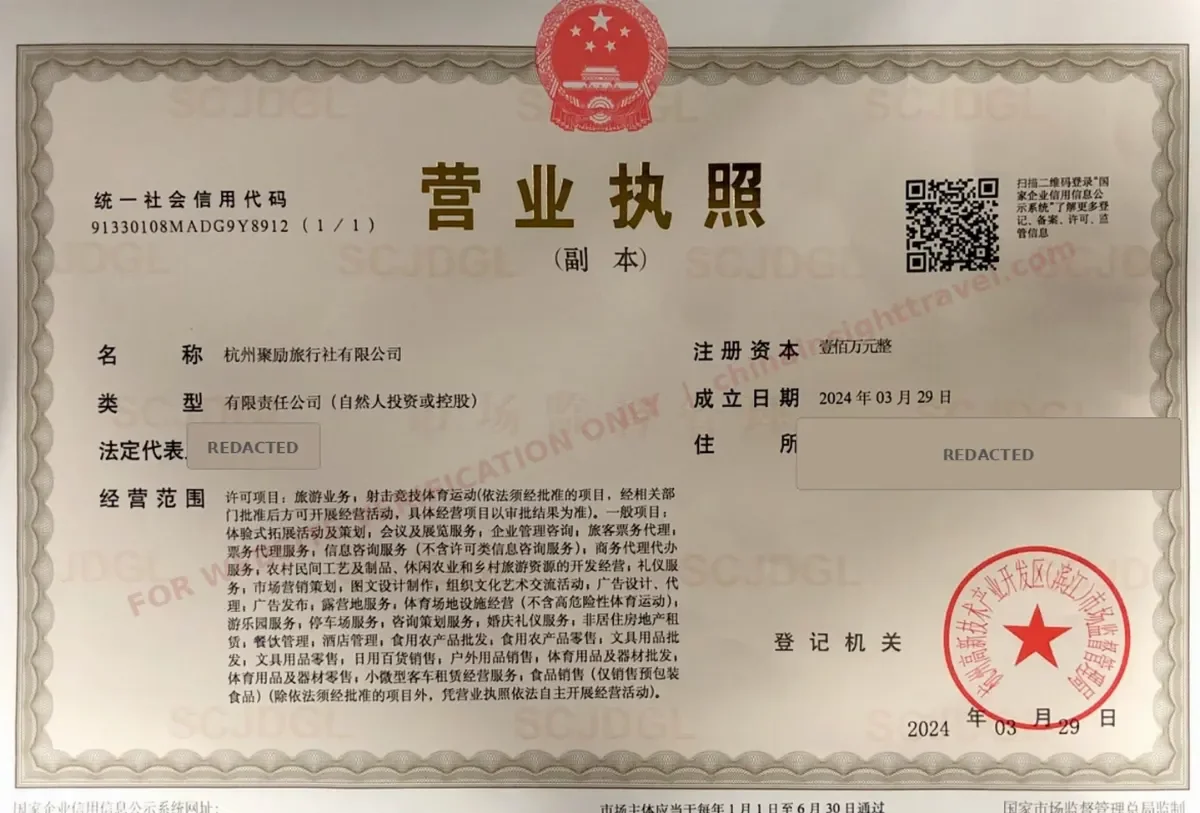
A business license is the first written record of a supplier's registered company details.
A young trading company may be perfectly legitimate and still have no factory history for you to verify. An older company with a long record may have changed its business scope more than once, so read the years in business alongside the registered scope.
Remember, the absence of documents does not automatically disqualify a supplier, but it raises red flags that require further investigation. Avoid relying on testimonials or reviews alone; seek objective data.
Ask capability questions a trading company cannot answer from a script
Now move from who they are to what they can do. Ask for details on their manufacturing processes, the equipment on the floor, and the people running it. If they can share a factory layout or capacity report, ask for it.
Verify that they have the necessary machinery for your products, and inquire about maintenance schedules. Confirm where they source materials, as this affects product consistency and ethical considerations.
For capacity, ask which line and production window the supplier proposes for your order, and what evidence supports the estimate. Counting machines tells you little about the existing workload or the operation that limits output.
Also identify the proposed manufacturing address and any outsourced operations. If printing happens elsewhere, note that location and ask how printed panels return to the sewing factory without mixing versions. If access to a subcontractor is outside the visit, the report should say so. An undisclosed gap should not disappear inside an overall score.
A photograph of a quality department sign is not evidence that your specified seam will be checked. A trading company's cross-reference is only as independent as its relationship with the factory allows.
Run a live video call, not a photo gallery
Use video calls to tour the facility, observe production lines, and discuss processes directly with staff. Request a real-time tour to avoid pre-recorded videos that may hide issues.
Prepare a list of questions in advance, focusing on quality control measures, production timelines, and flexibility. Inquire about defect rates, packaging procedures, and how they handle customizations. Take notes during the call to compare with other suppliers later. Always note any evasiveness or reluctance to share information, as it may indicate underlying problems.
The call answers questions the documents could not. A license tells you a company exists; the video call shows you whether the address on that license has your kind of work running when you ask to see it.
A good sample does not settle questions about the production site. Photographs of sewing machines cannot answer the second question.
Keep identity, capability and shipment checks separate
Company identity, manufacturing capability and the condition of a shipment are related checks, but their results should remain distinguishable in your purchasing file.
A manufacturing audit assesses the facility and its capability; a product inspection checks goods against requirements. A factory audit and a product inspection answer different questions, and paying for one does not automatically answer the other.
Before paying a deposit, specify which capability needs checking; "Please check the factory" is too broad to produce a useful quotation. With a limited checking budget, start by writing down the decision you need to make and the evidence that would change it. Skipping a check does not remove the uncertainty it was meant to resolve.
Record separately what the documents established and what the video call established, so the file shows which question each item answered.
Before placing bulk orders, request samples to assess quality firsthand. When evaluating samples, consider factors like material durability, design accuracy, and packaging integrity. Document your findings and compare them with the supplier's original claims. Avoid rushing this process, as it is a critical indicator of final product quality.
Send this written request before you transfer the deposit
This is a template: replace the product and operations with your own before you send it.

Writing the request message before sending it to the supplier.
Subject: Verification request before deposit: [product]
Before we transfer the deposit, please provide:
- Business license and any relevant export license.
- The manufacturing address for this order, and confirmation of which steps are performed in-house and which are subcontracted, with the site for each.
- An equipment list relevant to [product], plus any factory layout or capacity report you can share.
- A slot for a live video call this week so we can see the production line for [product].
- Any access or document limitations, stated plainly, so we know what we cannot verify.
Request evidence tied to these questions, together with any access or document limitations.
Seek references from other buyers who have worked with the supplier. Contact references directly if possible, asking specific questions about on-time delivery, quality consistency, and responsiveness. Treat all references as variables to verify, as they may be biased or outdated. Do not solely rely on online reviews; instead, use them as one piece of the verification puzzle.
Once you have verified the supplier's credentials and capabilities, draft a clear agreement that outlines all terms, including product specifications, pricing, payment terms, delivery schedules, and quality control procedures. Use contracts to formalize commitments, but always have them reviewed by a legal professional familiar with international trade. Avoid vague language; clarity is key to avoiding disputes later.
These are brief templates, not inspection standards. Replace the example product and operations with your own, and ask the provider to identify gaps before you authorize the visit.
What this sequence does not tell you
Keep in mind that this checklist is a guide, not a guarantee. Each supplier is unique, and variables such as market conditions or regulatory changes may affect your verification process. Always treat each variable as a point to verify independently, as practices may vary.
A virtual audit is not a substitute for physical verification. Even a report marked "pass" needs to be read against the work you actually commissioned. The findings can support your purchasing decision; they cannot guarantee the delivery date.
This guide does not cover how to read the registered business-scope wording on a Chinese license, how to match a payee bank name to the licensed company name, what platform verification badges do or do not prove, or how common misrepresentation of manufacturer status is. These remain open questions for you to close.
If you still need to establish who the supplier is, start with the supplier verification checklist.
Send your product specification, the proposed factory location, the decision you need to make and the problem you are most concerned about to your team or sourcing contact. That gives a useful starting point for discussing scope before arranging checks. If you want help defining the visit, send Surmount the product specification and current order stage.
Related guides: Essential Checklist for Verifying China Suppliers as a New Importer · Factory audit or product inspection in China: which do you need?