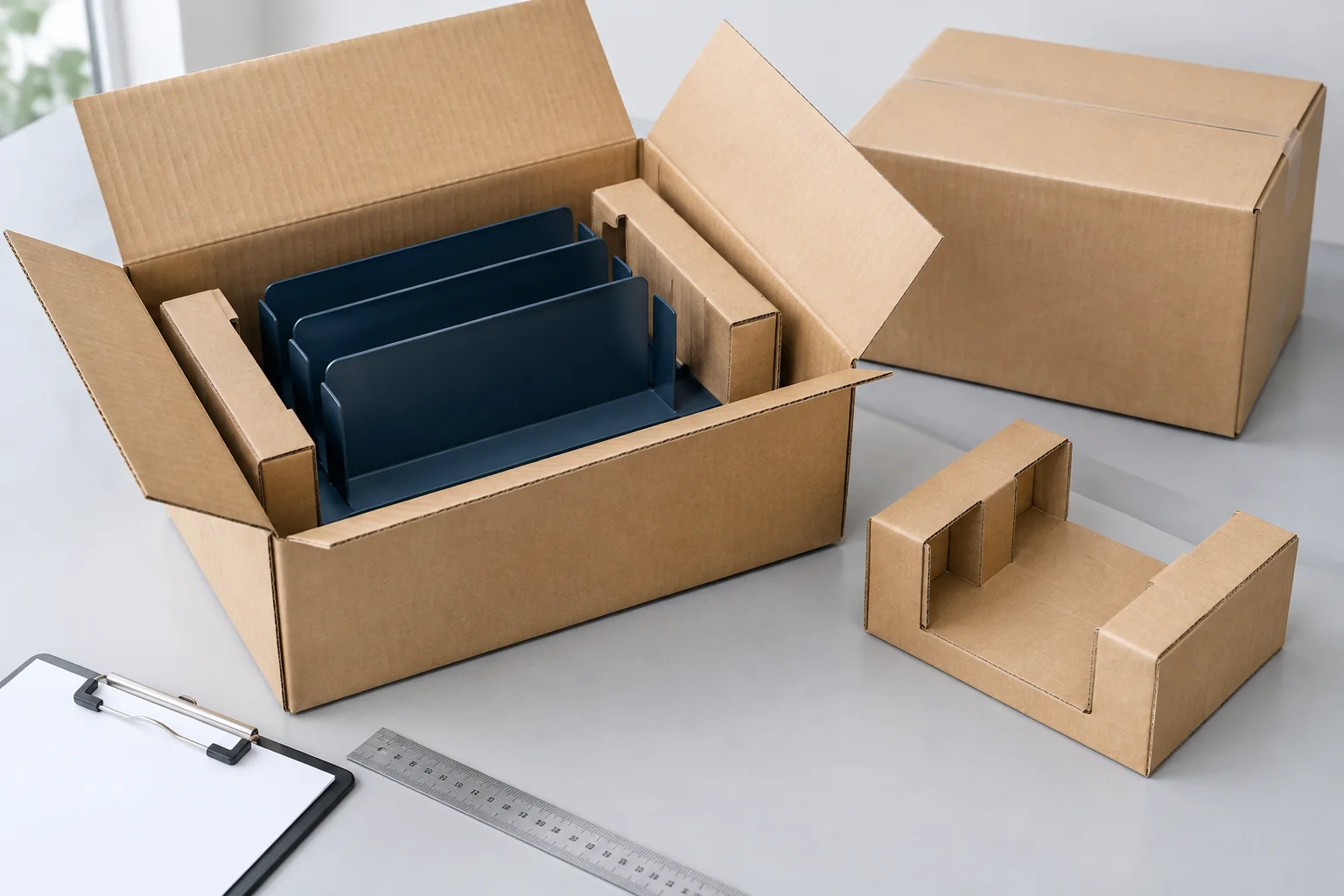
“The carton passed the drop test” is useful only when you know what was inside, which packaging was used and how the result was judged. Before approving a China sourcing order, ask for the test record and connect it to the packing specification the factory will actually use. A video of a box landing on the floor leaves several of those questions unanswered.
Start by deciding what the evidence must support: choosing between two inserts, approving a new packing design, meeting a customer's test requirement, or confirming that the current production packaging follows an already approved design. Those decisions need different evidence. Agree the scope before the test and before the supplier buys the remaining packaging materials.
Describe the journey before choosing the test
Tell the testing provider how the goods will move after they leave the factory. Will individual parcels go to customers, or will cartons stay on a pallet until a distribution centre? Will a consolidation warehouse open them? Does a retailer add another outer box? Include the final delivery stage, since the factory-to-port journey may cover only part of the handling.
ISTA's test-selection guidance links the choice of test to the actual distribution environment. Its procedure overview distinguishes screening tests from tests that simulate transport hazards. A drop demonstration alone should not be described as completion of a broader procedure.
Ask the laboratory or qualified testing provider to identify the applicable procedure and current version, its scope, and any receiver-specific requirement. Have it explain any omitted or changed part. Avoid choosing a height simply because another supplier used it for a similar-looking box. This article is a buying and review checklist, not a set of test instructions.
Identify the exact product and packing revision
Create a short packing specification that someone outside the factory can follow. Record the product SKU and revision, quantity per carton, packed weight and external dimensions. Identify the carton material specification, inner supports, dividers, protective bags and closure method. Use part references and photographs to show how the pieces fit and which way the product faces.
“Export carton with enough foam” is difficult to compare with a finished shipment. Ask for the actual materials and arrangement to be recorded. A thicker-looking carton is not proof that the entire package protects the product better; the fit of the internal support still needs evaluation.
Keep the test sample's packing revision separate from a draft replacement. If a supplier proposes a thinner insert after testing, the earlier result describes the previous configuration. Send the change to the testing provider for a decision on additional evaluation. Do the same when the product weight, pack quantity or closure changes.
Agree what counts as damage before testing
Specify what the evaluator will inspect after the test and how it will be checked. “No damage” leaves room for disagreement about a bent accessory, a scratched finish or a crushed retail box. Separate product function, product appearance and the condition needed for the intended sale.
For example, consider a hypothetical order of metal desktop racks with removable feet. The proposed acceptance checks might cover stable assembly, feet that remain correctly fitted, an acceptable finish and retail packaging suitable for sale. The buyer and testing provider must turn those requirements into clear methods and limits appropriate to that product. They are not universal acceptance rules.
Agree who decides borderline findings. If the test reveals an unacceptable condition, keep the original result. A later commercial concession should identify the specific deviation and quantity; it should not silently turn the original report into an unqualified pass.
Make sample preparation traceable
Confirm how many samples the agreed procedure and project need, who selects them and whether they are production units or development samples. Do not assume one conveniently prepared carton is representative of every size or packing configuration in the order. Ask the provider how variants will be covered and which comparisons are justified.
Before dispatching samples, record their IDs, contents, condition and packing revision. Photograph the packing stages before closing the box. If the sample needs extra protection on its way to the laboratory, identify that transit protection separately and ask the laboratory to confirm the actual test configuration. An extra transport carton should not accidentally become part of the approved design.
Put the appointment and report date into the order schedule. Clarify whether testing consumes or damages samples and whether replacements are needed. Tell the supplier which packaging purchases or packing operations depend on the result. Resolve those dependencies before confirming collection.
Read the report beyond the pass box
Request the full record rather than a cropped result page. Check the following in the report:
- Can you match the sample IDs, product version and packing revision to the order?
- Does the report identify the procedure and version, actual test conditions, sequence, sample count and any deviations or limitations?
- Are the before-and-after observations tied to the same samples, with checks against the agreed acceptance criteria?
- Does the conclusion state what was assessed, what passed or failed and what remains untested?
A short video can help explain an observation, but may not show preparation, every test stage or the internal condition afterward. Ask for missing records. If a report covers a different SKU or packing revision, request a written explanation of its relevance instead of assuming that the photographs look close enough.
Read the result within its stated scope. An internal trial, an independent laboratory report and a customer-required qualification are different kinds of evidence. Confirm which one your customer needs. None should be treated as a guarantee that every production carton will arrive undamaged.
Change the design with a specific reason
If a package fails, preserve the observations before repacking the sample. Ask where the product moved, which support deformed and whether the closure opened. Treat an explanation such as “the box is too weak” as a proposal to investigate, not a complete diagnosis. The product, insert and outer carton may need to be considered together.
In the hypothetical desktop-rack order, the supplier might suggest an insert that holds the feet more securely. Record the revised part and packing method, then agree the appropriate retest with the provider. Do not describe a quick check on the repaired sample as a successful repeat of the full procedure unless that is what was performed and documented.
Compare the approved options using packaging cost, packing labour, measured dimensions and any testing cost. A larger insert can change the transport quote; our guide to carton size and chargeable weight explains that separate calculation. Keep the protection requirement in the decision instead of selecting the smallest box on freight cost alone.
Carry the approved design into the production run
After approval, give the packing team a dated instruction with the final materials, arrangement and closure. Withdraw superseded versions. Have the first production packages compared with the approved specification, and include packaging conformity in the agreed inspection scope. Record substitutions before they disappear inside sealed cartons.
The test and the production inspection answer different questions. Testing evaluates the submitted configuration under stated conditions; a production check can establish whether inspected goods follow that configuration. Agree the coverage and limitations of both. If a shipment is already packed and a problem remains unresolved, use a specific hold and release process such as the one in our failed-inspection guide.
Keep the final report, packing revision and release decision together. At receipt, ask the warehouse to record damaged carton references and photograph the unopened box before documenting the contents, where practical. Compare those observations with the packing records before changing the next order. A transport incident does not by itself identify which party or design feature caused the damage.
A supplier request you can adapt
Please send the current product and packing specifications, sample identification, and the proposed test procedure and version before testing. Confirm the acceptance criteria, sample selection, testing provider, report date and any limitations. Please record the actual materials, packing arrangement and closure used.
After testing, send the full report and observations for review. Do not substitute packaging materials or start the packing operations that depend on approval until we confirm the relevant revision. If a change is needed, identify it and propose the next evaluation before proceeding.
For help coordinating packaging with Chinese suppliers, send Surmount your product and order details, the planned delivery route and any customer test requirement. Include the current packing photos and existing report, if available, so document review, supplier follow-up and any specialist testing can be scoped separately.