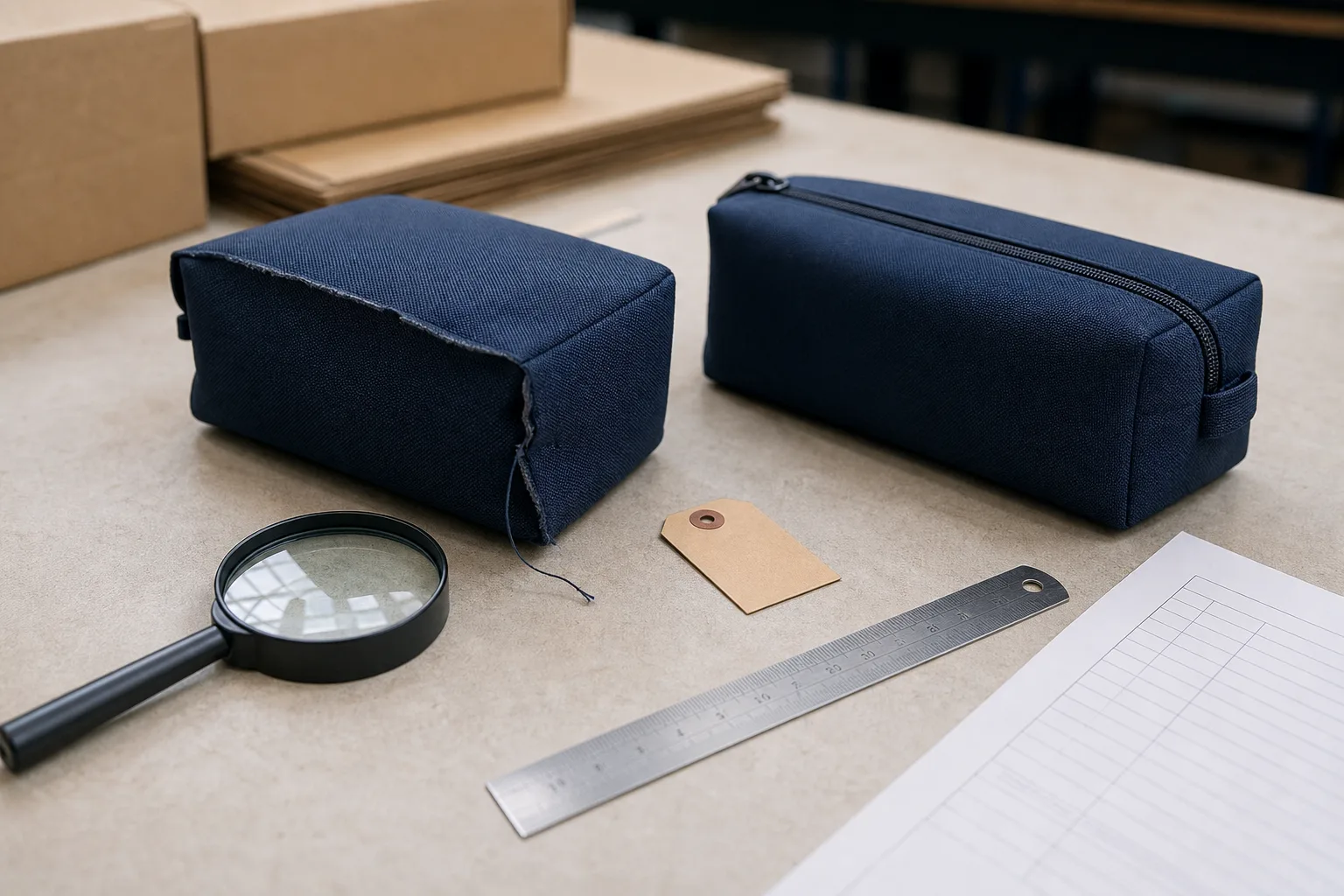
The inspection report says “fail.” Your supplier says the defects are easy to fix. Meanwhile, the forwarder wants to confirm collection. The useful next step is to put the affected goods on hold and agree what evidence will allow them to leave—not to negotiate a discount before understanding the problem.
For a buyer sourcing from China, a failed inspection creates three separate decisions: what must be corrected, how the correction will be checked, and who can release the shipment. Keep those decisions in writing. A factory photo, a revised invoice and a passing inspection report each answer different questions.
Start with the findings, not just the red result
Read the report against the specification version, approved sample and inspection checklist supplied for that order. Identify the affected SKU, lot and carton references. Then separate product defects from missing information or inspection limitations: a broken fastening, an incorrect retail label and an unavailable test instrument need different responses.
Ask the inspector to clarify an ambiguous finding, especially where the report and purchase documents appear inconsistent. If the wrong specification was used, establish the correct version and ask for a documented correction or additional check. Do not quietly rewrite the acceptance criteria to make the result pass.
Sampling also matters. A failed sample does not mean every unit is defective; a passing sample does not establish that every unit is sound. QIMA’s AQL explanation describes how sample results inform acceptance or rejection of a lot. Use the agreed sampling plan and defect classifications rather than treating “AQL 2.5” as a promise that only 2.5% of an order can be defective.
Put a specific hold on the affected stock
Tell the supplier, sourcing coordinator and forwarder which goods must not be collected or loaded. Give order and lot references, quantities and the name of the person authorized to release them. Ask the factory to separate held goods from approved stock and preserve the carton identification.
This is an operational instruction, not simply an email saying “please improve quality.” QIMA’s inspection instructions likewise require client approval before shipment. Confirm that everyone arranging collection has received the hold; an inspection company does not automatically control the truck booking.
If only one SKU appears affected, do not assume the rest can leave immediately. First establish whether other items share the same component, label or production process. A partial shipment needs identifiable, separately approved stock and a revised packing list.
Ask for a correction plan you can verify
“We will check everything” gives you little to inspect later. Request a short written plan with these details:
- Scope: which lots and quantities are affected, and how the supplier established that scope.
- Action: what will be sorted, repaired, replaced or repacked, with a clear acceptance criterion.
- Ownership and timing: who is responsible and when the corrected stock will be ready for verification.
- Evidence: quantities checked, quantities rejected or repaired, dated photos and traceable carton or batch references.
- Prevention: the likely cause, how it will be confirmed, and what changes before the next production run.
For a hypothetical order of fabric pouches with open seams, repairing the few pieces photographed by the inspector is not a batch correction. The plan could involve checking the affected production lot for that specific seam defect, separating rejects, repairing suitable units and recording the quantities. Confirm the method with the inspector; sorting for one visible defect does not check every other requirement.
A factory’s explanation of the cause is still a hypothesis until supported. “Operator error” does not tell you whether the stitch setting, material or work instruction changed.
Choose verification that matches the problem
Photographs can document a changed label layout. They cannot, by themselves, show that every relevant carton has been relabeled or that a repaired fastening works. Decide with your inspector whether you need a targeted follow-up, a new random inspection of the corrected lot, or additional testing.
For a reinspection, provide the original report, approved correction plan and unchanged acceptance criteria. Define the lot to be sampled and include the original failed checks plus any checks that rework could affect. Opening packages, for example, may create a need to recheck quantities, accessories and packaging condition.
Have the inspector select samples from accessible stock, rather than from a small group of pieces prepared by the factory. Keep the first report and the follow-up together. The new report should make clear what was checked and what remains unresolved.
Before repacking closes the evidence trail, reconcile the quantities: stock entering rework should be accounted for as corrected stock, rejects or goods still on hold. If carton numbers change, keep a cross-reference. This makes it harder for uncorrected pieces to disappear into an apparently ready shipment.
Where findings raise a safety or regulatory question, keep the affected goods on hold while the relevant qualified specialist determines the evidence needed. A visual reinspection is not a substitute for an applicable laboratory test, and a commercial discount does not resolve a safety issue.
Settle costs and timing without losing the release decision
List the costs separately: sorting, replacement parts, repacking, repeat inspection, storage and changes to the transport booking. Check the purchase agreement and confirm any new allocation in writing. There is no reliable universal rule that the factory always pays every cost after a failed inspection.
Ask for two dates: when correction will finish and when the goods will be available for independent verification. Only then reassess the collection date. A promise to finish rework tomorrow is not a confirmed inspection appointment.
A limited cosmetic deviation may warrant a commercial discussion if it is safe, permitted and suitable for the intended sale. Record the exact deviation and affected quantity if you accept it. Do not replace the failed report with an unqualified “pass,” and do not let an invoice credit become an accidental shipment approval.
Send one clear instruction, then close the loop
You can adapt this message after reviewing the report:
Please hold the affected stock identified in the attached inspection report. Do not release it for collection until we provide written approval for the specified lots and quantities.
Please confirm the affected scope, proposed correction, responsible person, completion date and quantity records. Send the agreed evidence before we arrange verification. Also confirm the proposed allocation of rework, reinspection and booking-change costs.
We will review the follow-up result against the agreed requirements. Any partial release will identify the approved SKUs, lots, carton references and quantities; all remaining held stock must stay separate.
Before releasing the order, check that the correction evidence, follow-up report and final packing list refer to the same goods. Keep written approval with those records. That connection is what makes the decision usable when a warehouse, supplier or forwarder asks which cartons can leave.
For help coordinating a sourcing order and its inspection requirements, send Surmount your product details and current order stage. If you already have a failed report, describe the affected goods and the required delivery date so the next step can be scoped around the actual problem.