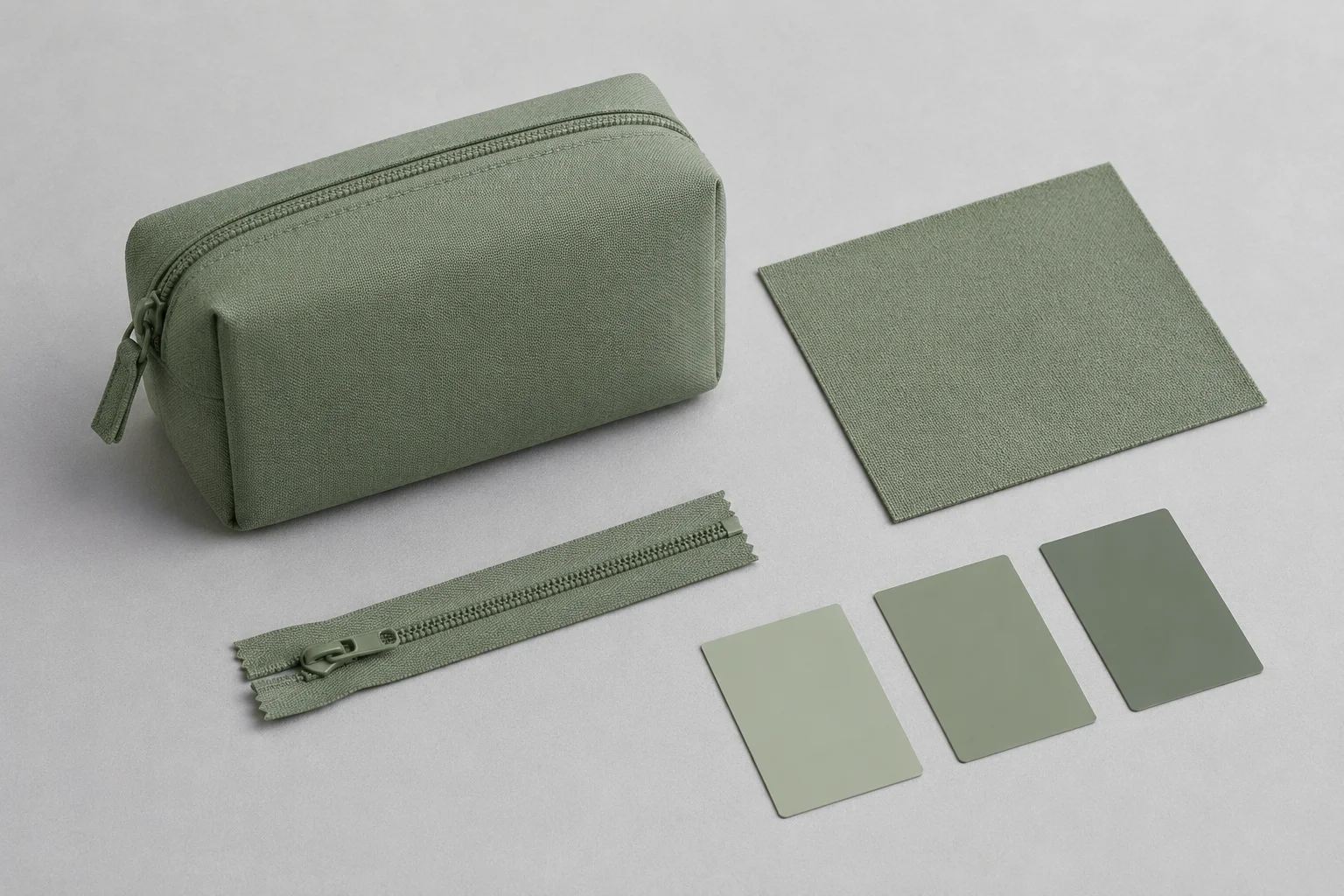
A supplier can use the color code you requested and still deliver a product that looks wrong beside its accessories. Before approving a China order, agree which physical reference governs each component, how the colors will be compared and who can accept a deviation. A phone photo and a message saying “color confirmed” leave too much unresolved.
This matters for products sold as a coordinated set, including bags with contrasting trims, storage products with matching lids and gift items packed in branded boxes. Check whether the finished combination meets the agreed appearance and whether the supplier can repeat it across the order.
Give the color reference a defined job
Start by naming the color system and the full code, including its suffix. Pantone explains that C and U identify coated and uncoated paper references; their printed appearance differs. A paper color reference alone does not specify the appearance of every product material.
Tell the supplier what that reference is for. It may be the starting target for developing a fabric color, the reference for a printed sleeve, or a brand direction that still needs physical approval. Ask which reference system is suitable for the actual material and finish. Do this before the factory orders colored materials, not after all components have arrived.
Once you approve a physical sample, record whether it becomes the production color standard for that component. Keep the original color code in the record, but resolve any difference between the code and the approved sample in writing. Otherwise the factory may follow the sample while your inspector follows the color card, with both believing they are using the correct instruction.
Review the assembled combination
Consider a hypothetical sage-green travel pouch. The fabric mill supplies canvas, another supplier provides zipper tape, and a printer produces its paper sleeve. Each may show a satisfactory sample in isolation. Place the actual pieces together before deciding whether the pouch is ready for production.
Decide which element leads the appearance. You might approve the canvas first, then ask for zipper options to review against it. If an exact-looking match is impractical, choose between a deliberately contrasting zipper and an acceptable coordinated shade. Record the selected option. “Make everything green” gives the suppliers no way to resolve that choice.
Ask for the intended production material and finish in this submission. Mark any substitute clearly: a stock zipper used for fit approval does not also receive color approval. For a printed sleeve, assess the finished print treatment rather than treating an on-screen artwork preview as a finished color sample. Our product sample guide covers the broader sampling process; the decision here is specifically about the appearance of the complete combination.
Agree viewing conditions before judging the match
Two pieces can match under one light and differ under another. Datacolor describes this as metamerism. For purchasing, agree the lighting conditions for approval and any additional conditions relevant to the product's use.
Ask the supplier and checker to document how they will present the reference and production sample together. Specify the viewing setup with a competent color specialist when appearance is sensitive. Do not substitute the loose instruction “check in daylight” for a repeatable setup, or assume a lamp's marketing description establishes a suitable test condition.
Photographs remain useful for identifying the sample, showing which pieces were compared and recording an obvious problem for follow-up. However, an ordinary photo viewed on different phones should not be the sole evidence for a close color decision. If you cannot review the physical pieces yourself, appoint someone who can compare them under the agreed conditions and provide a written finding. State what remains unapproved while physical review is pending.
Turn “close enough” into an acceptance instruction
Prepare an approval record that a checker can use without replaying weeks of chat. Include these items:
- The SKU, component, material and finish, with a dated identifier for the approved reference.
- The comparison conditions and the person authorized to decide disputed results.
- The acceptable appearance and any agreed boundary samples showing the limit, clearly distinguished from the target.
- The production stage and batch coverage to check, the evidence to retain, and what happens when a result falls outside the agreement.
When instrumental measurement is part of the specification, ask the qualified provider to define the method and reporting settings as well as the tolerance. Datacolor's instrument FAQ notes that no single Delta E tolerance fits every product. Avoid copying an unexplained number from another supplier's report into your order.
Have the supplier explain how it will demonstrate compliance with the agreed method. Decide in advance how a conflict between visual approval and a measurement result will be resolved. Ask the checker to identify the reference, method and components covered by any passing result.
Do not let one component's approval imply approval of everything else. For the hypothetical pouch, the record might say “canvas color approved; zipper option under review; sleeve print awaiting physical proof.” This allows work on approved components to proceed while the others wait. A blanket “sample approved” could release all three prematurely.
Keep the approved reference usable during production
Give the factory and checker identifiable reference samples, and confirm that their copies match the buyer's approved reference before using them. Keep them protected from contamination, wear and light exposure. If a reference becomes doubtful, pause that comparison and reconfirm it rather than quietly replacing it with a recent production piece.
Agree a check of the first relevant production output before the supplier processes the rest of the order. Define the stage carefully: approving fabric before the intended finishing process may leave the finished appearance unassessed. Ask the supplier to identify which stages can affect the result and schedule the approval accordingly. Agree the sample delivery and review time when planning production.
Then define how later material or production batches will be checked and kept traceable. One accepted sample from the start does not establish the appearance of later batches. The checker should record which batches and components were examined, compare them with the same authorized reference, and distinguish differences within a set from differences between separately packed units. The inspection scope and sampling plan need agreement for the actual order.
For repeat purchases, explicitly carry forward the reference and review any proposed change. Our repeat-order checklist explains the wider change-control process. A slightly different shade accepted for one urgent shipment should not silently become the new target.
When a batch looks different, identify it before negotiating
Ask the factory to identify and separate the affected material or finished goods. Record the batch, quantity, component and production stage. Request a comparison against the current approved reference using the agreed method. If the evidence is only a photograph, keep the conclusion provisional until the required review is complete.
Find out whether the discrepancy is confined to a trim, an entire material batch or the assembled product. In the pouch example, replacing zipper tape before sewing is a different decision from opening finished seams to replace it. Ask for the proposed correction, its effect on other requirements, the recheck scope and the revised completion date. A cosmetic fix still needs confirmation that the product remains acceptable.
If you decide to accept a deviation, specify the affected batch and quantity, the precise exception and any commercial agreement. Keep the original target separate from that concession. Do not accept a discount before deciding whether the goods can serve their intended sale: a lower price does not make mismatched pieces suitable for a coordinated set.
A message to send before colored materials are ordered
Please confirm the color reference and intended material/finish for each component. Submit the main material and visible accessories together, identify any temporary substitutes, and tell us which physical sample will become the production standard after approval. Please also confirm the proposed viewing conditions and any measurement method requiring our agreement.
Before proceeding with the remaining production, submit the agreed initial production evidence. Keep later batches traceable to their checks, and hold any affected goods outside the agreed acceptance limits for our written decision. Please identify the review dates needed to keep the proposed production schedule achievable.
Adapt that message to the product and the stage already reached. If materials have already been ordered, ask what can still be changed and at what cost before issuing new instructions. To discuss coordination in China, send Surmount your component list, existing color references and the approval still outstanding. Include whether you need local sample comparison, supplier follow-up or help arranging specialist color evaluation so the proposed scope addresses the unresolved decision.