Your first shipment sold well, so you send the supplier a short message: “Same product, same quality, please repeat the order.” The supplier may understand “same” as the last shipment, including any temporary concessions you accepted. Before releasing a repeat order for production, confirm the reference version, any proposed changes and the checks for the new batch.
Carry forward the specification, not every exception
Find the specification revision and sample approval used for the last accepted order. Include the product, accessories, artwork and packaging. Give the supplier those references in the new purchase order, even if the SKU stays the same.
Then review concessions from the previous shipment. Perhaps you accepted a slightly different color for one urgent delivery, or agreed to plain boxes while printed packaging was delayed. State whether each exception ends with that batch or becomes part of the new specification. Otherwise, “same as last time” can preserve a compromise you never intended to repeat.
If the specification and physical sample disagree, resolve that difference before production. Record which requirement applies to the disputed feature. Our product specification guide explains how to document the underlying requirements.
Ask what changed, even when the quote did not
Ask for a written change declaration covering:
- Material grade, component model and the suppliers of those items.
- Tooling, manufacturing process or production location.
- Color, finish, dimensions and functional requirements.
- Packaging construction, artwork, labels and accessories.
Have the supplier mark each item unchanged, changed or not yet confirmed. “Equivalent material” needs a named replacement and evidence relevant to its intended use. A matching price, product name or photograph does not establish that the construction is unchanged.
A change is not proof of wrongdoing. The factory may have lost access to a component or found another workable option. You still need enough information to assess fit, performance, cost and timing before approving it. Ask for that explanation before the replacement enters production.
Check the part that interacts with the change
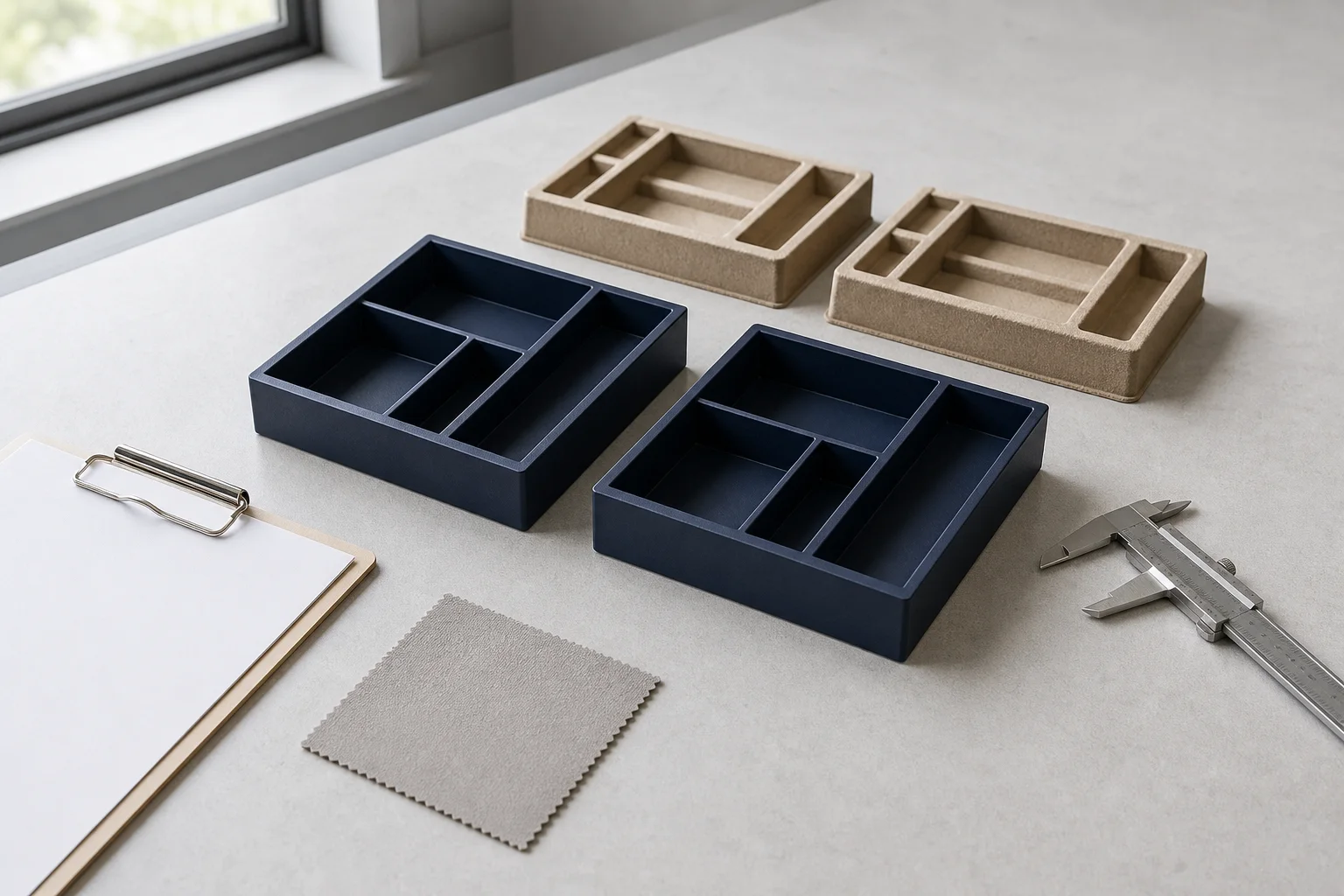
Consider a hypothetical reorder of desktop organizers. The supplier proposes a new mold that keeps the visible shape but slightly changes the outer dimensions. A photo looks familiar, yet the organizer may no longer fit the existing cardboard insert.
Compare a revised sample with the approved dimensional requirements and test it in the actual insert. Check the combined product and packaging, not just the tray on its own. If a material or construction change could affect performance, agree the relevant test method and acceptance criteria with the supplier or a qualified testing provider. Do not invent a universal tolerance to make the new item pass.
Decide how much reapproval the change requires. A corrected artwork file may need a print proof; a changed material or tool may need a physical sample and additional testing. Record what was checked and what remains open. A new sample approval applies to that identified version, not to unspecified later substitutions.
Compare the current batch with an identifiable reference
Keep an approved reference sample with its SKU, revision, approval date and order reference. Protect it from damage, fading and wear. If its condition is doubtful, reconfirm the reference before using it to accept another batch. A sample helps with comparison but cannot establish an unseen material property by itself.
Ask who will select the new production samples and where they will come from. QIMA describes its sample-picking service as selecting units directly from production. A prototype supplied separately does not show what was made for the current order.
Provide the checker with the current specification, approved sample details, authorized changes and previous defects to revisit. Agree the inspection scope for this batch. One good sample or a previous passing report does not establish the condition of every unit in a new order. If a check fails, use the correction and release process before dispatch.
Keep versions separate through receipt
If an old version remains in stock while a revised version ships, make them distinguishable in the order, carton records and receiving instructions. Decide whether they can be sold interchangeably before the warehouse mixes them. Keep any internal revision or batch reference consistent across those records.
Record the reorder approval in one place: the agreed version, listed changes, evidence reviewed, unresolved items, approver and date. Send the same record to the supplier and whoever checks and receives the goods. Retain the superseded record so a later complaint can be traced to the relevant batch.
For help coordinating a repeat order, send Surmount the previous order reference, current specification and proposed changes. Include the problem you are trying to avoid, such as fit, color variation or packaging damage, so the follow-up scope can address it.