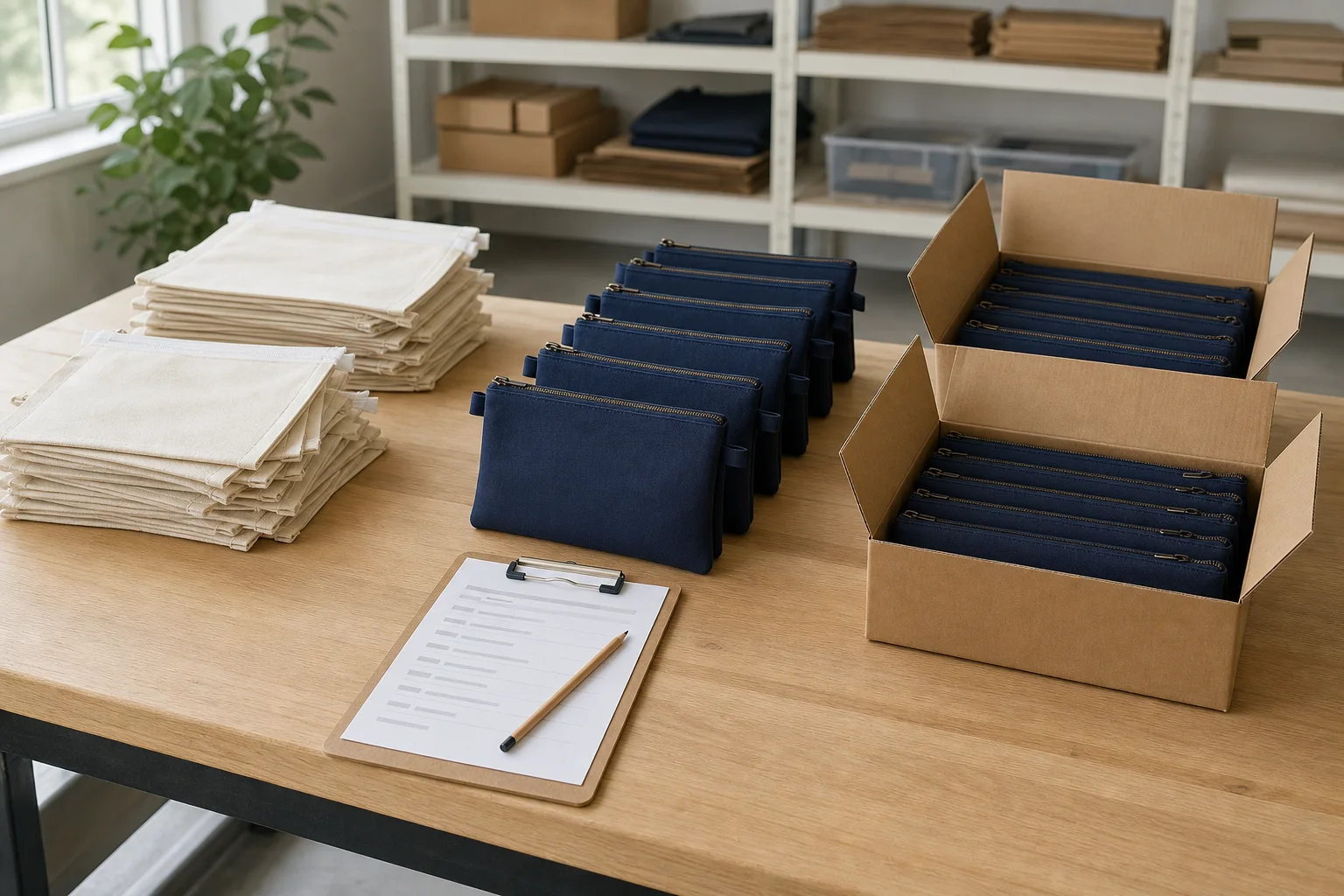
A supplier says your order is “almost finished,” but cannot confirm collection. Before changing a freight booking, ask what has actually been completed, what is holding up the rest and how the supplier arrived at the new date.
Agree on what the promised date means
A factory may use “finished” for goods coming off the line, while you are thinking of packed goods ready for collection. Write down separate dates for production completion, inspection, packing and pickup. Ask the forwarder to confirm the applicable handover deadline and transport schedule. Arrival at your warehouse also depends on the subsequent route.
Check when the original lead time started. Was it deposit receipt, sample approval or final artwork approval? Record any buyer changes and unresolved approvals alongside supplier delays. A revised schedule needs the actual starting conditions.
Replace “80% done” with quantities you can check
Request one dated update for the purchase order, broken down by SKU and variant. Use mutually exclusive categories so the same units are not counted twice:
- Not started, including the missing materials or approvals.
- In production, with the operation still required.
- Finished but not packed.
- Packed, with carton references.
Record rejected or held units separately, and state whether those units are included in a stage total. Keep inspection and release status in separate fields. Packed goods can still be awaiting inspection or a decision on defects.
Ask for dated photos or a short video linked to the order reference, showing the goods, unfinished work and relevant packaging. A close-up of one finished item cannot confirm the quantity available. If the update still conflicts with earlier reports, agree access for an on-site check and specify what the checker must verify.
QIMA describes production monitoring as checking production status and material availability; it also recommends pairing monitoring with a quality inspection. A progress report alone does not establish that the goods meet your quality requirements. QIMA production monitoring scope.
Find the task that prevents the order leaving
Consider a hypothetical order for 1,000 pouches. The supplier reports 800 finished units, including 500 packed units, and 200 still being sewn. That means 500 packed, 300 finished but unpacked and 200 in production. Adding 800 and 500 would overstate progress.
If the remaining 500 printed sleeves have not arrived, faster sewing alone cannot make the whole order ready. Ask for the sleeve supplier’s confirmed delivery date, then check the time required for packing and the agreed inspection. If that delivery is unconfirmed, the revised pickup date remains conditional.
Ask the factory to identify which unfinished task determines the completion date. For that task, record who owns it, the evidence of its status, the next action and the date for the next update. Do not add every activity duration together blindly: some work can run in parallel, while packing may depend on both finished products and packaging being available.
Compare the recovery options before approving extra cost
Waiting may be reasonable when the missing item has a credible arrival date and your stock can cover the delay. Ask for a revised inspection and pickup plan, including time to address problems found during checks.
A partial shipment needs its own quantity list, inspection decision, packing information and quote. Confirm that the first units can be sold independently. Compare the additional handling and transport cost with the estimated impact of waiting, stating how you estimated that impact. Our guide to consolidated and split shipments covers that comparison in more detail.
A proposed material, packaging or factory change needs your written approval before implementation. Ask whether it requires a new sample, tests or revised instructions and whether the promised time saving still holds after that work. Sending by a faster transport method only helps once acceptable goods are ready to leave.
Keep agreed quality checks in the recovery plan. If inspection finds a problem, use a separate correction and release process; a late order does not answer the question of whether it is acceptable.
A progress request you can send to the supplier
Please send a dated update for this purchase order, by SKU and variant. Show quantities not started, in production, finished but unpacked, and packed. Explain any held or rejected units and attach photos linked to the order.
Please identify the task currently preventing completion, the missing materials or approvals, and the person responsible for the next action. Confirm the revised dates for production, inspection, packing and collection, with the assumptions behind each date.
If you propose a partial shipment or a change of material, packaging or production site, please provide the quantity, revised cost and approval requirements before proceeding. Please name the person who will send the next update and confirm its date.
Keep this update beside the original schedule and compare the next report with it. If a milestone slips, record the reason and the revised downstream dates. Repeatedly moving the pickup date without evidence is a reason to verify the order on site before relying on another promise.
For help coordinating an order, send Surmount the product, supplier location, order quantity and latest progress report. Include your required arrival date and which details are still unconfirmed so the team can discuss an appropriate follow-up scope.