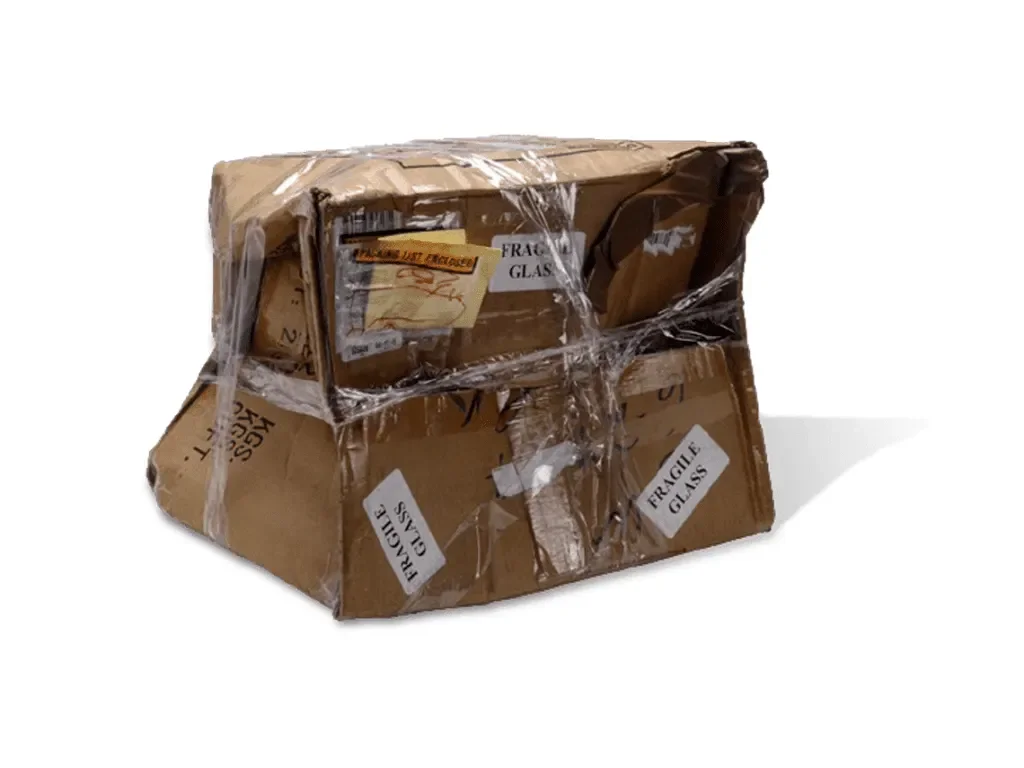
Crushed, shrink-wrapped cartons marked Fragile Glass, photographed as received.
If goods from China arrive defective after you’ve paid, start by saving the evidence and checking the earliest deadline that applies. Set aside the affected batch. Record the order number, the agreed requirement and what you actually measured, then send a written notice through the channel your contract requires. Check any platform, payment or carrier deadline separately; a supplier’s promise to look into the problem does not extend it.
This guide is general information, not legal advice. The legal effect of any notice or deadline depends on your contract, governing law, forum, and the live terms of the platform or payment provider you used. Where a deadline below is reported or approximate, confirm it on your own order page or with the provider before you rely on it.
Start by separating a manufacturing defect from transit damage or misuse
Not every problem that arrives in a carton is a supplier defect. Put the failure in the right category first. The category determines who may be responsible and what evidence matters.
- Manufacturing non-conformity: the goods fail the contract, specification, approved sample, drawing, bill of materials, testing protocol or stated standard.
- Wrong goods: the model, material, dimensions, quantity, colour, labelling, firmware or packaging differs from the order.
- Transit damage: the goods may have conformed when handed to the carrier but were damaged later. The Incoterm, shipping documents, insurance, packaging obligation and inspection record become central.
- Latent defect: the problem appears only after installation, stress testing, use or resale. The warranty and the distinction between apparent and hidden defects matter.
- Unsafe product: the defect causes injury or damage to property beyond the defective goods themselves. That is a different track from an ordinary quality dispute; stop distribution and obtain product-safety advice promptly.
Compare what arrived with what you actually agreed. China Dispute's guide puts it plainly: a viable claim usually turns on the agreed standard, proof of non-conformity, timely notice, an available remedy and a defendant with recoverable assets. The agreed standard can include contract terms, specifications, drawings, an approved sample, the agreed use and incorporated quality requirements.
Record the packaging, loading, delivery and operating conditions too. A crack that happened during unloading, a failed installation, normal wear and misuse can all look like a supplier defect if you only photograph the broken part. Preserve those records early, especially where the goods may have been damaged after the supplier handed them to the carrier.
Build the evidence file before you touch, rework or return the goods
The strongest file links four things: what was promised, what arrived, when and how you found the problem, and what loss followed. Work in that order, because every later negotiation, platform dispute or legal route will depend on those links.
Quarantine the affected goods. Separate them by shipment, batch, model and serial number, and do not mix them with other stock. Do not let the supplier rework every defective unit before you have preserved representative samples; doing that can remove the best evidence and make an independent retest impossible.
Photograph the shipment as received before you alter anything: seals, packaging, labels, quantities, visible damage and the goods themselves. Keep the contract, purchase order, specifications, drawings, approved samples, inspection criteria and any later variations in one folder. If the only version you have is buried in a chat thread, export or preserve it now.
Keep original emails, platform messages and WhatsApp or WeChat histories, not only cropped screenshots. Preserve acknowledgements, repair proposals or delay requests with their dates and senders. Also identify the supplier's full registered Chinese company name and the contracting entity.
Match names before you send. The registered Chinese company name and the contracting entity go in the notice and in the proof that it was received. The salesperson's English trading name or chat handle goes in the contact log, not in the legal-entity line. If the contract, the invoice and the receiving entity do not line up, fix the notice before it leaves your desk.
Where practical, retain representative defective and conforming samples under controlled storage. Photographs are usually not enough on their own. They need a link to the shipment and the contractual standard, and inspection reports, retained samples, measurements, test data and a chain of custody make the file stronger.
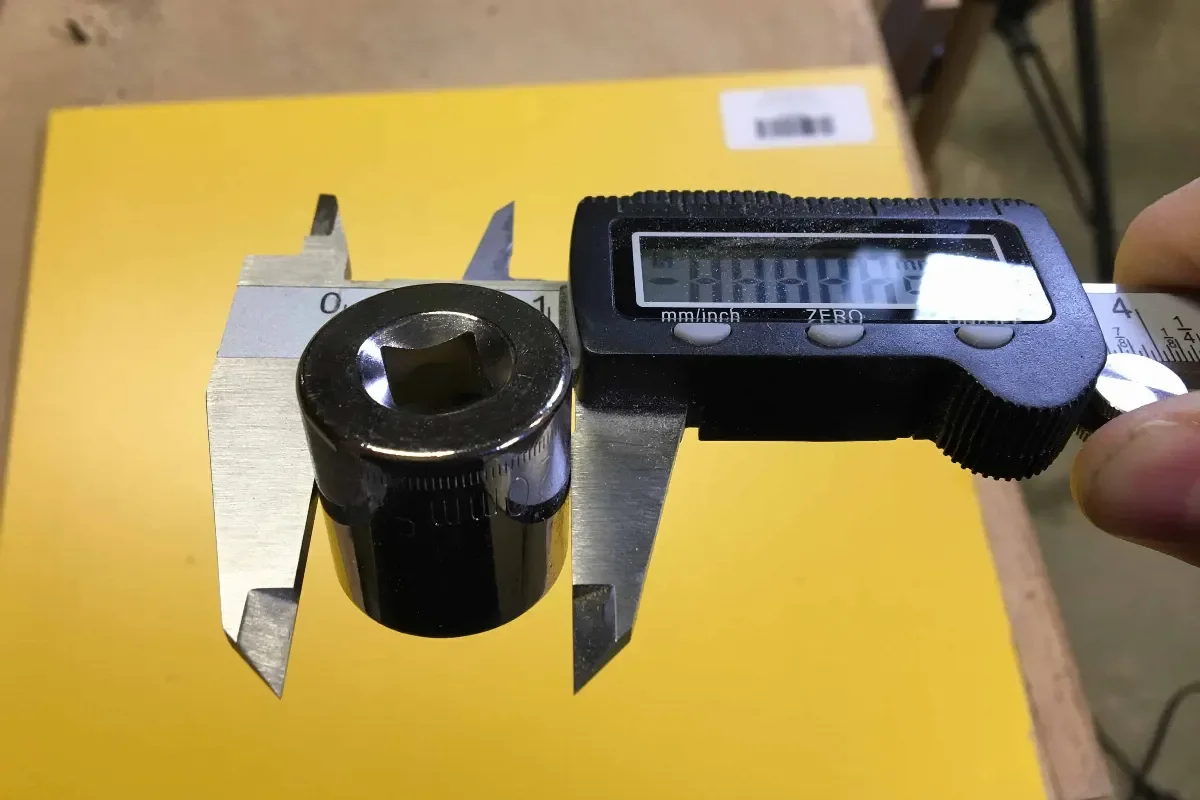
A dimensional check on a small machined part, recorded with a digital caliper.
If you commission an inspection, ask the inspector to identify who selected and sealed the sample, which batch, carton, serial number or container it came from, what contractual or technical standard was used, whether the method suited the alleged defect, whether raw data and unused samples were retained, and whether the supplier was invited to observe or comment. A report that says only that the products failed is not enough.
Write the defect as a measured deviation
A notice that says 'the quality is poor' gives the supplier nothing to answer and a dispute reviewer nothing to measure. A usable description states the item reference, the affected quantity, the measured result, the test date, the contractual specification, and the affected percentage or batch.
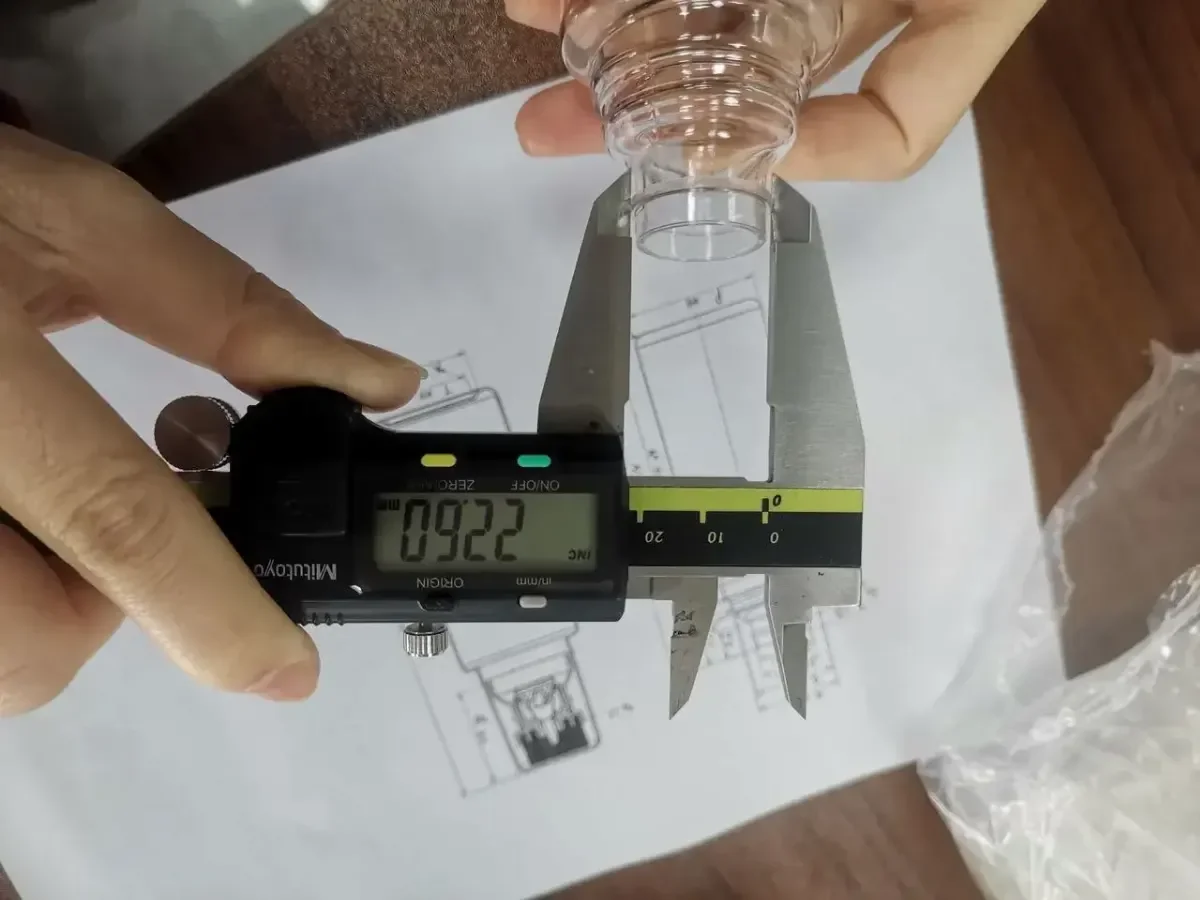
A digital caliper closed around the neck of a clear plastic container, with a technical drawing on the desk beside it.
Dreamview's guide illustrates the pattern: 'Sofa ref. S-2207, foam density measured at 22 kg/m³ per lab test dated 30 June 2026, contractual specification 40 kg/m³,' and, for tile, '35 mm crack from corner, 47 of 312 boxes (15%).' Those are examples, not industry thresholds or your case. Replace them with your order details.
A simple working formula is: item reference X, measured result Y on a stated date, against specification Z, affecting N of M units in batch or serial range. The notice needs the item, the batch and the measurement method so the supplier and any dispute reviewer have something specific to answer.
The same discipline applies to an inspection report: connect the contract, shipment, sampling method and test result, and tie photographs to the shipment and the contractual standard.
Send a specific written notice through the contractual channels
Once you can describe the failure, send a written notice even if testing is still continuing. Do not wait for the final report if a shorter notice period may be running.
The first notice should identify the contract, purchase order and shipment; the affected quantity, batch, model or serial numbers; the agreed requirement and the specific deviation; when and how the defect was discovered; the evidence attached and any planned inspection; the remedy requested and a response deadline; and an express reservation of all contractual and legal rights.
A template you can adapt:
Subject: Defect notice - [PO/order] / shipment [container or AWB]
We received [quantity] units of [item] under [contract or purchase order]. Against [specification clause or approved sample], we measured [result] on [date], affecting [N] of [M] units in batch [batch or serial range]. We discovered the issue on [date] by [method]. Attached are [photos, inspection data and sample list]. Testing is continuing on [scope]. We request [replacement, repair, price reduction or refund] and a written response by [date]. All contractual and legal rights are reserved.
This is a template, not a legal form. Replace every placeholder and check it against your contract.
Send the notice through every contractually recognised channel, and keep proof that the supplier's correct legal entity received it. Do not return goods until the return address, freight, customs, inspection, refund timing and transit risk are agreed in writing.
Identify which clock applies before you argue about a refund or replacement
If the damage happened in transit, check the cargo claim route
Save the order page, the receipt status and the refund or dispute deadline shown for your transaction. Keep a dated copy of each. If the supplier asks for time to investigate, decide when you must file based on that deadline, rather than waiting indefinitely for a response. Reference: Alibaba.com.
Before arguing about a refund, ask how the money left your account. Each payment route has its own recovery mechanism and its own deadline.
Alibaba Trade Assurance
If the order was placed and paid through Alibaba Trade Assurance, the platform dispute is a parallel track. China Legal Hub's refund guide describes it as a platform dispute with a short claim window and platform evidence rules. Trade Assurance does not replace the underlying contract claim, and an Alibaba claim and a China contract claim are different tracks.
Alibaba.com’s refund policy describes 30- or 60-day filing windows. Check which window applies and what date the platform counts as delivery for your order. Request any refund in the order before the deadline it shows.
Before you rely on any platform date, write down the date the order page treats as receipt. That may be the day you click to confirm receipt, or the system's automatic point after the longest transit time for the chosen logistics method; the page shows the countdown. Put it next to the date your written notice goes out. Those are two clocks, and collapsing them into one line is how buyers miss the platform window while thinking they are still inside the contract notice period.

A hand circles a date on a desk calendar, a reminder to record each relevant claim date separately.
Check whether the order and payment were recorded under Trade Assurance. A wire transfer to the bank account specified in the Trade Assurance order can be a supported payment method. A separate payment to the supplier is not equivalent; check your transaction before assuming either route is covered.
Easy Return has separate order-value, country, product and eligibility conditions, so do not assume every purchase receives the same protection.
Upload evidence that maps the defect to the online order's exact quality requirement. A private inspection standard that never appeared in the online order may be difficult to enforce through the platform. If the supplier has not agreed and performed a reliable cure, open the platform claim before the deadline. Do not move the negotiation off-platform while the claim window runs. A platform settlement or refund can reduce or release what remains for a later claim, so read the settlement terms before accepting them.
Card, PayPal and T/T
Ask your card issuer or PayPal which dispute categories, eligibility rules and deadlines apply to this transaction. Save the answer alongside the order record.
For T/T bank transfer, recovery depends on the contract, the evidence file and a credible next step. There is no chargeback button after the goods arrive damaged.
Contract, warranty, legal notice and limitation
There is no universal 48-hour rule. Several clocks may apply: the contract inspection or rejection period, a warranty period, the platform claim window, a notice rule under the governing law, and the limitation period for filing arbitration or litigation.
Under PRC law, the limitation period for litigation or arbitration over an international sale of goods is generally four years, counted from when you knew or should have known of the loss. A four-year filing period does not give you four years to inspect the goods and tell the supplier about the problem.
Under the CISG, as Kelly Zhang explains, the buyer must examine the goods promptly and give notice specifying the nature of the lack of conformity within a reasonable time. The notice right may be lost after two years from handover unless a longer contractual guarantee applies. If Chinese law governs without the CISG, notice must be given within a reasonable time and at most two years after receipt, and a signed delivery note stating quantity, model and specifications can raise a presumption that quantity and patent defects were inspected; sign with a reservation.
A demand letter does not revive a missed inspection notice, extend an Alibaba deadline or automatically terminate the contract. Your contract, governing law, forum and the current legal text control.
Parallel recovery warning
Before opening a parallel dispute, check whether one route pauses or closes another. Keep the deadlines visible and read the release terms before accepting a settlement.
Agent service window
If a sourcing agent's warehouse inspection is part of your file, keep its service claim window separate from platform, payment-provider and legal deadlines. Our warehouse-inspection terms state a 15-day claim window after receipt for qualifying defects, with general warehouse inspection following Level II at AQL 2.5. That is a service term, not a statutory or platform deadline.
Choose a remedy that fits the defect and settle costs in writing
A defect does not automatically entitle you to a full refund. The remedy should fit the commercial problem, the strength of the evidence and the seriousness of the failure.
| Remedy | Usually worth considering when | Terms to control |
|---|---|---|
| Repair or rework | The defect is curable and downtime can be controlled. | Agree scope, standard, deadline, cost and testing before work begins. |
| Replacement | The goods are unusable but a conforming replacement still has commercial value. | Address freight, customs, disposal and what happens if the replacement also fails. |
| Price reduction | The buyer can safely use or resell the goods at a lower value. | Support the reduction with market, repair or resale evidence. |
| Refund or termination | The defect is serious enough to defeat the contract's purpose. | Termination is not automatic; return and risk arrangements must be planned. |
| Damages | Documented loss was caused by the defect and was sufficiently foreseeable. | Separate ordinary business costs from incremental loss and show mitigation. |
Under the CISG as described, the supplier may remedy at its own expense even after the delivery date if it can do so without unreasonable delay or unreasonable inconvenience to you. If it asks whether you will accept a replacement and you do not answer within a reasonable time, it may perform within the period it indicated, so answer in writing. If it remedies, or you refuse its remedy, you may lose the price reduction, but damages remain available.
Substitute delivery can be required only if the lack of conformity is a fundamental breach and you request it with the notice or within a reasonable time afterward. A discount on the next order is not compensation. It ties you to the same supplier and may be treated as a waiver if accepted as settlement. Any replacement agreement should be in writing, with dates, acceptance tests and what happens if the new batch also fails.
Sorting or rework and inspector-return costs should be allocated before inspection, based on the agreed cause and responsibilities, rather than argued on shipping day. A law-firm guide states that under CISG the seller generally cures at its own expense and reasonable return freight is typically recoverable as damages, but the written contract controls. Do not return goods before the defect is documented and cost allocation is confirmed in writing.
The next step: build the claim file before you send the demand
Treat the first response as a controlled evidence-and-notice sequence. Separate the cause of the defect, preserve the shipment and records, describe the deviation in measurable terms, send a specific notice through the contractual channels, and check the shortest applicable deadline tied to your payment route. Then choose repair, replacement, price reduction, refund or termination, or damages with costs documented in writing.
Before you send anything, open one folder labelled with the order number. Put the contract, the photos, the count, the notice draft and the payment-route deadline in the same place. Then send the notice through the channels your contract recognises, and put a response date in it. If a warehouse inspection is part of the file, put its service claim window in the same folder, labelled separately from platform and legal deadlines.