
If the quote names a freight forwarder, ask whether that company is arranging transport, filing as a licensed broker, or agreeing to be the importer of record. Get the answer in writing and compare it with the broker’s instructions.
Who is the importer of record when you buy from a Chinese supplier?
Under 19 U.S.C. 1484, merchandise must be entered by the owner, the purchaser, or a licensed customs broker appointed by one of them. The party who makes entry is the importer of record. That party owes CBP two duties that run directly to the government: to use reasonable care, and to provide the information CBP needs to assess duties and determine admissibility.
In a typical DDP shipment, five parties touch the cargo. They are easy to blur.
| Role | What it usually does | Answerable to CBP for the entry? |
|---|---|---|
| Foreign seller or shipper | Sells the goods; under DDP pays freight and duties | Only if named as importer of record |
| You, the U.S. buyer | Buys the goods and receives them | Only if named as importer of record |
| Ultimate consignee | Physically takes delivery; often your warehouse or 3PL | Not liable merely because it is named as consignee; yes if it is also the importer of record |
| Licensed customs broker | Files the entry for the importer | Acts for the importer; may be importer only when named in a broker-as-IOR arrangement |
| Surety | Issues the bond that secures duties | Financially, if duties go unpaid |
The row that matters is the importer of record. Paying for the goods, paying the freight and being legally answerable for the customs entry are three separate things; DDP does not automatically put them in the same hands. A DDP seller takes contractual responsibility for arranging import clearance and bearing the duties and taxes the rule allocates, but that allocation does not identify an importer, make the seller eligible to be one, or move the right to recover import tax.
The carton carries the goods; the document pouch is where blank entry paperwork travels with the shipment.
So when a supplier writes "customs and duties included," ask a narrower question: which legal entity will be named in the importer field? "We handle it" tells you nothing; a legal name does.
What must the named importer set up before the first entry?
The importer number is the practical anchor. Under 19 CFR 24.5, each person or business must file CBP Form 5106 with the first formal entry or the first request for services that will result in a bill or refund. The form asks for the importer name; an EIN for a U.S. company, an SSN for an individual, or a CBP-assigned number where neither exists; mailing address; physical location if different; phone; and email.
The identity record is not a formality. CBP has said it will not accept a registered agent, customs broker, freight forwarder, P.O. box, business service center or another party as the importer's physical address. The principal's home address is acceptable. The email and phone must belong to the importer, not the broker.
Since Sept. 18, 2026, CBP may immediately void an IOR number if it finds the information inaccurate or incomplete. A voided number is invalid for any purpose, including entering merchandise. Check the record before you rely on it.
A broker can file Form 5106 under a valid power of attorney, but the POA must be executed directly with the importer, not through a forwarder. Before the first shipment, confirm the legal name, importer number, physical address, email and phone all belong to the entity that will be named. If ownership, address or broker arrangements change, review the record again.
- Legal name matches Form 5106 and the entry.
- EIN, SSN or CBP-assigned number belongs to that entity.
- Physical address is its actual place of business.
- Phone and email belong to the importer.
- Broker holds a direct POA.
- Calendar the record for review after ownership, address or broker changes.
Who can qualify as a U.S. importer of record after Jan. 5, 2027?
CBP's interim final rule creates two categories. An individual qualifies as a U.S. IOR if the individual is a U.S. citizen or lawful permanent resident. An entity must be organized under U.S. law, located in the United States, and continuously meet either the beneficial ownership and control test or the qualifying U.S. real property test. An IOR that fails those requirements is a foreign IOR. BakerHostetler summarizes the rule that way.
The test is narrower than a U.S. address. U.S. formation, an EIN or a U.S. mailing address will not, standing alone, establish U.S. IOR status. The beneficial ownership alternative requires at least 51 percent of the entity's beneficial owners to be U.S. citizens or lawful permanent residents and to have control of the entity. The real property alternative asks whether the entity directly owns a significant amount of unencumbered U.S. real property at all times.
The rule does not set a dollar amount, percentage or valuation test for what counts as a significant amount of real property, according to the same law-firm analysis. Confirm the current threshold in CBP guidance or with counsel rather than relying on a number from memory.
Illustrative case, not a customer story: a U.S. distributor owned by a European parent imports under its own EIN. If its beneficial owners are not U.S. citizens or permanent residents, it is a foreign IOR from Jan. 5, 2027 unless it directly owns enough qualifying U.S. real property. "U.S. incorporated" is not the full test.
What changes if the importer is a foreign company, including a Chinese supplier?
For goods expected to enter US commerce on or after January 5, 2027, have the broker check the planned entry date against the new rule. A foreign importer covered by it must be CTPAT-validated or designate a CTPAT-validated licensed broker. A booking or deposit made in 2026 does not settle which rule applies. Federal Register rule and effective date
From Jan. 5, 2027, a foreign IOR entering or withdrawing goods for consumption must be CTPAT-validated or designate a CTPAT-validated customs broker to make entry. CBP's CSMS notice states the requirement. It covers formal consumption entries and covered informal entries filed on CBP Form 3461 or 7501, or their electronic equivalents, according to Clark Hill's summary.
A foreign IOR that is not CTPAT-validated may not make entry on its own behalf. It must designate a licensed customs broker that is CTPAT-validated; a broker license alone is not enough. Only Canadian foreign IORs are currently eligible for CTPAT validation in the applicable category, according to the Federal Register text. Many foreign IORs will therefore depend on a CTPAT-validated broker.

A person reviews a stack of documents at a desk beside packed cartons.
If the foreign principal is not the owner or purchaser of the merchandise, the CTPAT-validated broker must act as the importer of record. A broker acting as IOR also needs an executed POA; the rule amends 19 CFR 141.46 to require it even when the broker makes entry in its own name. All licensed brokers, not only CTPAT-validated ones, must verify whether each client is a U.S. or foreign IOR before filing an entry, as Diaz Trade Law explains.
Who can actually file the entry: supplier, forwarder or customs broker?
The statutory route is the owner, the purchaser, or a licensed customs broker appointed by one of them. A broker filing as agent does not become the legally responsible importer; using a broker does not transfer responsibility for classification, valuation or duty payment. Strix's 7501 guide puts it plainly.
Booking transport creates no ownership or purchaser interest in the goods. That is why a forwarder cannot become importer of record merely because it booked the container. It can qualify only as an owner, purchaser, or licensed broker appointed by one of them, or if it has another real financial interest in the goods. A party acting solely as consignee for a consolidated shipment does not qualify, according to CargoTrans.
If a broker acts as importer of record in its own name, it needs an executed POA. The authorization must run directly between broker and importer. A forwarder may help with translation, legal review or courier delivery, but it cannot sign or negotiate the POA in the importer's stead, CBP's POA notice explains. The rules do not fully address every non-broker forwarder arrangement. Where the role is unclear, ask for the legal entity and the written basis for its right to make entry.
What does the importer of record remain responsible for after the broker files?
The broker is not a liability shield. The IOR remains responsible for the correctness of entry documentation, accurate payment of duties, taxes and fees, and compliance with every federal requirement that applies to the goods, even when a broker handles clearance. Jade International's CBP summary puts that directly.
The IOR must ensure the commercial invoice, packing list and Entry Summary on CBP Form 7501 are accurate; classify goods under the HTS; value them correctly; mark origin; and pay duties. The duty of reasonable care requires active steps to make declarations accurate, not simply passing along what a supplier provided. Import records must be kept for at least five years from the date of entry.
The liability chain is personal. Under 19 CFR 141.1(b), duty liability is a personal debt of the importer. If you pay a broker and the broker then fails to remit to CBP, your payment does not discharge the government debt. The bond section below explains what the bond secures; it is not your liability shield. Your remaining claim against a defaulting broker is contractual, while CBP still looks to the importer. Penalty exposure under 19 U.S.C. 1592 has negligence, gross negligence and fraud tiers, and CargoTrans describes those consequences.
Practical controls:
- Reconcile invoices to payments and purchase orders; investigate discrepancies.
- Read the 7501 before it becomes history: HTS code, declared value, origin, duty and fees.
- Keep classification and origin support, not just the broker's filing confirmation.
- Ask for the entry and entry summary copies, and correct errors before they grow.
When is a customs bond required, and what does it cover?
A basic importation and entry bond may be single-transaction or continuous. The principal and surety agree, jointly and severally, to deposit duties at release or withdrawal and to pay additional duties later found due, under 19 CFR 113.62. It is a financial guarantee among importer, surety and CBP; the bond does not reduce or defer the duties themselves.
Not every import requires a continuous bond. Bond requirements depend on entry type and merchandise. Formal commercial entries generally require a bond, while some transactions may qualify for different treatment, as Clearit's guide explains. For the postal entry process for mail shipments valued at $2,500 or less, filers must obtain a basic importation and entry bond; shipments are not released until CBP receives the bond, BDO reports. That bond must be on file in ACE eBond before any filing, Troutman adds.
Do not turn that postal rule into a general $2,500 exemption for every import. CBP guidance does not clearly set the bond treatment for all non-postal low-value or informal entries.
A continuous bond generally runs 12 months and can cover multiple formal entries at multiple U.S. ports. For an established importer, a Clearit guide citing CBP Publication 3569-0224 states the Activity Code 1 amount is generally 10 percent of prior duties, taxes and fees, with a $50,000 minimum. A new importer uses an estimated annual amount, with the same minimum. CBP can require more for risk. Single-transaction bonds are generally sized on entered value plus duties, taxes and fees; certain agency or quota categories can trigger three-times-entered-value, but that rule is a single-transaction issue, not an ordinary continuous bond. CBP updated its bond-amount guidance in 2024, replacing 1991 guidance, Sandler reports.
The bond amount is coverage, not the premium. A $50,000 bond does not cost $50,000; the annual premium is separate and typically smaller. Do not confuse the two.
How should a buyer reconcile a DDP or delivered-duty quote with the named importer?
Treat DDP cost allocation and importer-of-record status as separate questions. DDP allocates cost and risk; an importer of record satisfies a legal requirement. Most cross-border programs need both settled, Carra Globe argues. The seller's promise to clear goods does not identify an eligible importer, and it does not move the right to recover any import tax. If the DDP price assumes import tax is recoverable but it is not recoverable by the buyer, the real cost is the quoted price plus the irrecoverable tax.
Ask for the legal entity name and the importer or registration number it will use. If the buyer is named IOR, confirm whose EIN anchors the entry and the bond. Establish who obtains the bond and files the entry. Agree before shipment to receive the entry, the declared value and the duty or tax evidence. A DDP seller should also explain the destination clearance arrangement and the documents you will receive. If a shipping partner claims it handles everything, ask which company actually does the import work and what information you must supply.
Then test the quote's assumptions. Ask which HS code and duty rate the quote assumes, how long the rate is locked, and who bears the difference if tariffs, classification or valuation change. Ask whether the price assumes any tax or duty recovery, and who is entitled to it under the destination's rules. A quote that asks you for no tax details and no authorization may still have an unseen importer; if that entry is wrong, you may hold no duty receipts and no records of your own.
If the seller cannot produce that chain, do not simply accept a promise. Before you fall back to DAP, require the seller to name the IOR, its importer number, the bond principal and whether the POA runs directly with the importer. If it cannot, price DAP through a broker you name and can instruct, and agree before the deposit who will provide the entry, declared value and duty evidence. That is a practical alternative, not a finding that DDP is unlawful. Surmount's DDP and DAP guide is useful background for that handoff.
A written handoff checklist before you pay a deposit
Build a one-page responsibility table. For each row, require a legal entity name and evidence; do not accept a service slogan or a chat promise.
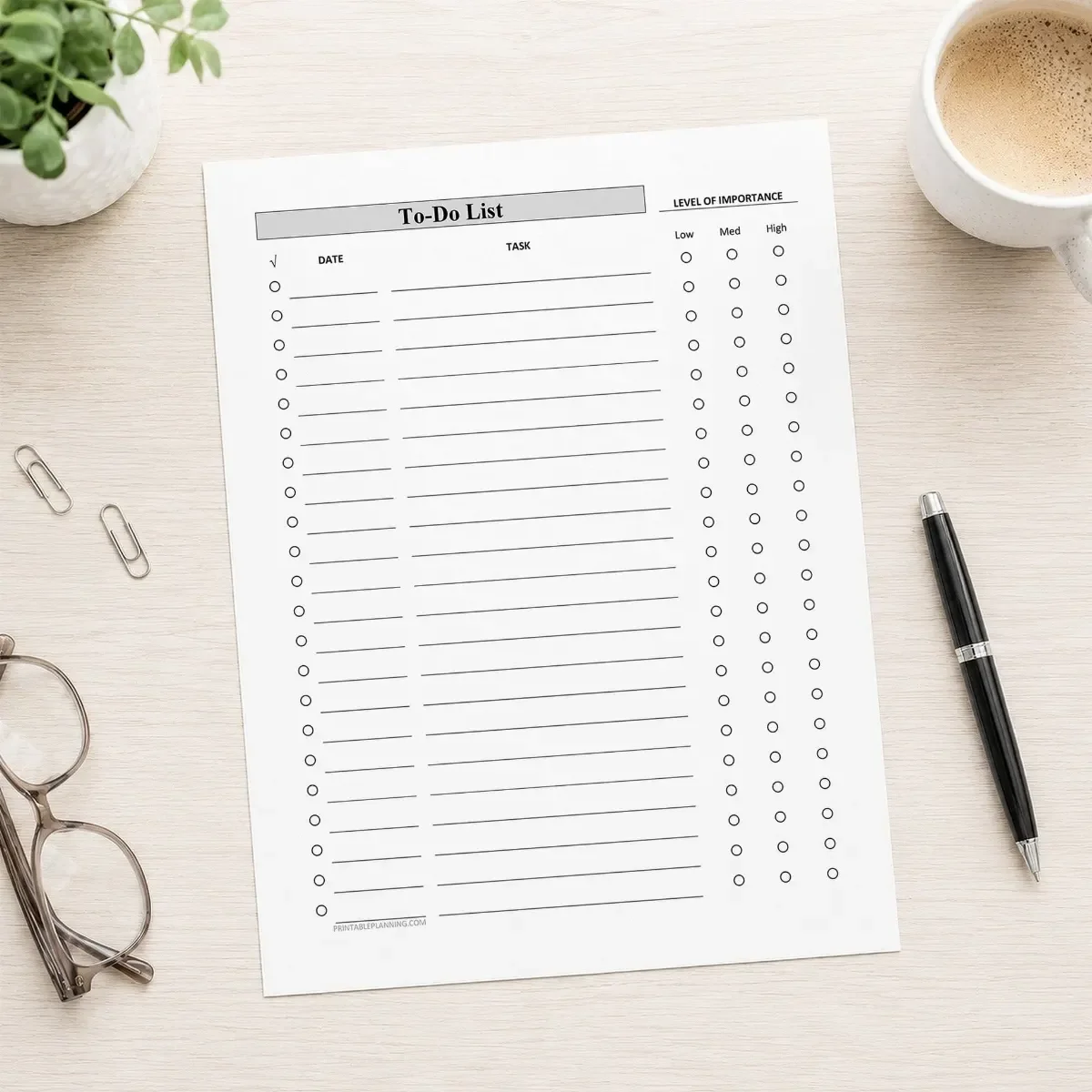
One page, one row per decision: a printed checklist table and pen on a plain desk.
| Decision | What to require |
|---|---|
| Purchase contract | Who buys the goods? Legal entity, PO or contract, and delivery term. |
| Importer of record | Legal entity named on the entry; U.S. or foreign IOR status; importer number; and which entity may lawfully be named. |
| Entry filer | Licensed broker legal name; broker licence and any registrations or authorisations needed, including CTPAT validation where a foreign IOR is named; POA executed directly with the importer? |
| Bond principal | Who posts the bond? Single or continuous? Bond number and cost inside the quote? |
| Duty payer | Who funds the duty? Who receives CBP's receipt? |
| Document holder | Who holds the entry, 7501, invoices, proof of payment and origin support? How will you get copies? Which records should your business retain? |
If you become importer of record, confirm the EIN, bond and POA sequence before deposit. Label any assumed HS code, duty rate or tax treatment as an assumption to verify. Retain entry records for five years, and reassess if ownership, control, address or broker arrangements change.
Here is a message you can adapt. It is a template, not legal language:
We are buying [product] from [supplier]. Please confirm in writing: (1) the legal entity that will be named importer of record, its importer number and whether it is a U.S. or foreign IOR; (2) if foreign, its CTPAT status or the CTPAT-validated broker it will use; (3) who files the entry and whether the POA is executed directly with the importer; (4) who obtains the customs bond and whether the bond cost is inside the DDP price; (5) the HS code and duty rate the quote assumes, how long the rate is locked, and who bears changes; and (6) how we will receive the entry, declared value and duty evidence.
This checklist is a commercial handoff tool, not legal advice.
Before you pay a deposit, request the importer of record's legal name and a written entry, bond and duty chain. If the seller cannot show a workable structure, price DAP with a broker you can instruct. DDP is a cost term; it does not identify or vet the importer.
This article covers U.S. CBP rules, not other destinations, product-specific agency approvals or a particular product's duty rate. Eligibility and bond requirements depend on the facts and current guidance.