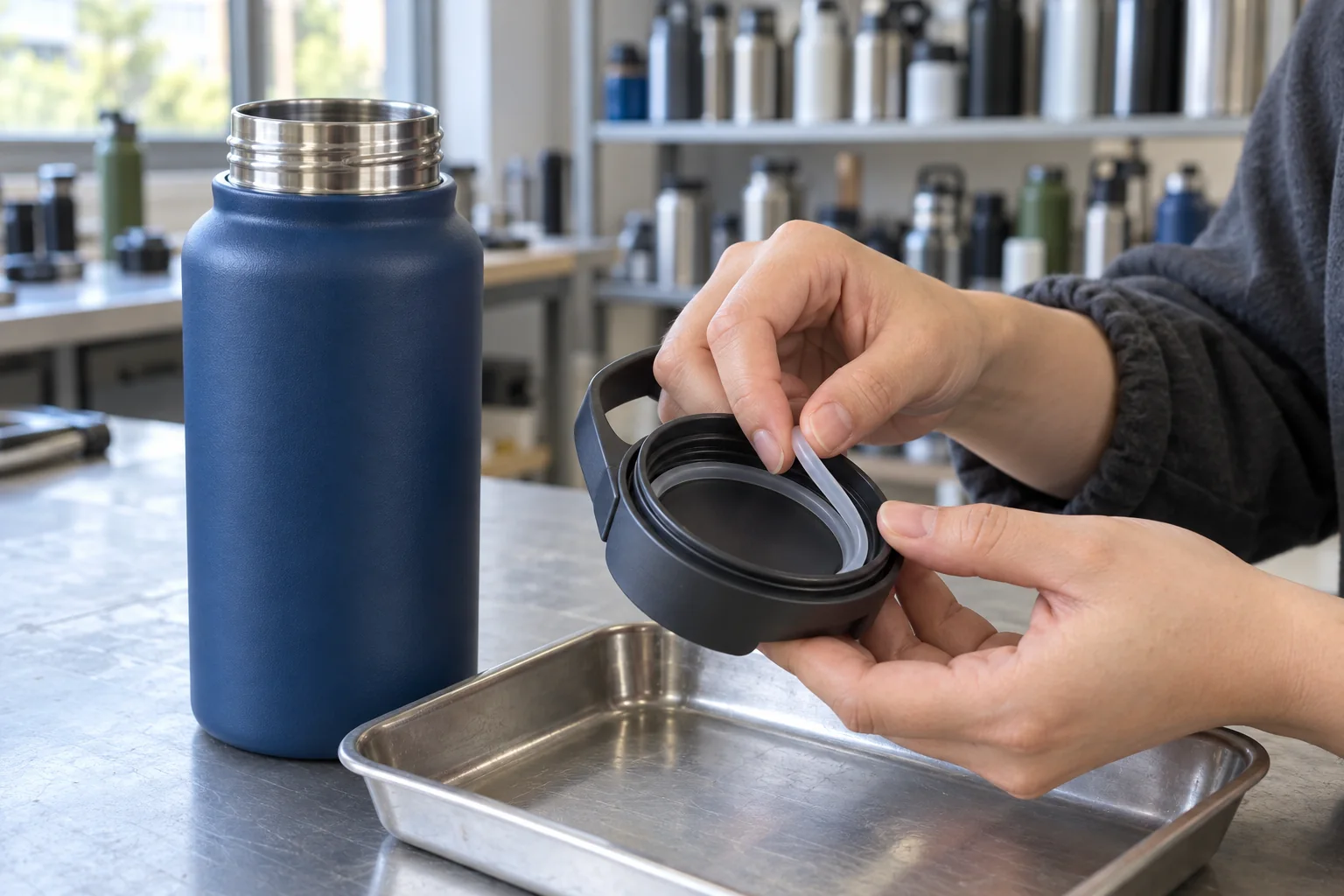
A stainless-steel tumbler can look right, carry a 304 stamp and still be the wrong product for your customer. The lid might reduce splashes at a desk but leak inside a bag. A gasket might seal when the factory assembles it, then become difficult to reinstall after cleaning. Resolve these points in the purchase specification before designing the packaging.
When sourcing insulated drinkware from China, approve the body, lid and seal as one product, together with the uses and claims you intend to sell. A material grade or an attractive sample cannot answer all those questions.
The 140th Canton Fair's second phase, scheduled for October 23 to 27, 2026, includes kitchenware and tableware. For buyers comparing drinkware this season, the useful work starts after collecting a sample: deciding what the complete product must do. A busy exhibition category is a reason to prepare questions, not evidence that a particular cup will sell.
Choose the drinking situation before choosing the lid
Start with a sentence a customer could understand: “A cold-water bottle carried inside a commuting bag,” or “An upright desk tumbler with a straw.” Those products may share a metal body, but they need different closures and instructions. A slide opening, straw hole or vent changes what you can reasonably promise about spills.
Ask the supplier to name the intended beverages, temperature limits and excluded uses for the exact lid. Do not assume a cold-drink straw lid also suits hot drinks, or that a closed opening makes a container suitable for carbonated beverages. Let the supplier explain the design's limits before you write your own sales copy.
Then check the dimensions customers actually use. Distinguish capacity filled to the brim from usable capacity with the lid installed. Record bottle height, opening size and base diameter. If cup-holder fit matters, identify the holder or dimensional envelope you are assessing. “Fits most cars” is a difficult claim to substantiate from a photograph.
A handle can improve carrying but interfere with a holder. A narrow opening can be convenient for drinking yet make cleaning harder. Decide which trade-off suits the intended customer; adding every feature can leave you with a product that does none of its jobs comfortably.
What a 304 specification leaves unanswered
“304 stainless steel” needs a location. Does it refer to the inner vessel, outer shell, both, or only a component mentioned in a quotation? Ask for a component list identifying the inner and outer steel grades, lid material, sealing-ring material, straw and any coating or decoration. Keep the list tied to a model and revision.
This is especially useful when two quotations describe almost identical bottles. One may cover a different lid assembly or a different outer shell. You cannot compare them properly until the suppliers quote the same configuration. A photo of a steel stamp does not establish the specification of every part.
Food-contact evaluation also needs the intended use. FDA reference tables distinguish food types and conditions of use. That is a useful reminder to describe the drink and exposure conditions, rather than ask for an undefined “food-grade certificate.”
Request documents that identify the tested product or materials, relevant components, test conditions, issuing laboratory and date. Have a qualified laboratory or compliance adviser determine what evidence the finished assembly needs for your destination market and claims. A report for a steel sheet or another cup is not automatically evidence for your chosen lid, gasket and finished product.
Do not replace that review with a higher-numbered steel grade. Material choice, manufacturing quality and intended use are separate questions. Keep unresolved documentation issues visible in the order file instead of treating a supplier's broad assurance as final approval.
Turn “leakproof” into an agreed sample check
The difference between resisting splashes and containing liquid inside a bag matters. For example, YETI describes Rambler tumblers fitted with a MagSlider lid as leak-resistant, not leakproof. That statement concerns those named products; it is not a judgment about every tumbler or every lid from that brand.
For your own product, ask which openings seal and which remain vented. Have the supplier explain the closure sequence and correct gasket position. If ordinary users need unusually careful alignment to avoid a leak, include cleaning and reassembly in evaluation rather than judging only a freshly assembled sample.
Agree a written check using room-temperature water and the manufacturer's safe handling instructions. Specify fill level, closure method, orientations, duration and what constitutes failure. Record where moisture appears. Do not improvise a hot-water shaking or inversion demonstration: it can introduce burn and pressure hazards and is unnecessary for this initial comparison.
There is no universal duration or sample quantity proposed here. Set them with the supplier and inspection team for the use claim and order risk. A short demonstration can screen a sample, but it does not establish performance throughout the product's service life.
Try more than one approved sample where your plan requires it. Label the bodies and lids so results stay traceable. After removing and reinstalling the gasket according to instructions, repeat the agreed check. Record a ring that twists, stretches or will not sit securely. If a lid is interchangeable only within a particular model revision, put that restriction in the specification.
When a sample fails, identify the leak path before accepting a repair. A supplier changing a seal, closure or neck dimension must submit the revised assembly for approval. Passing the original body with a different lid does not approve the new combination.
Check thermal claims and cleaning with the finished decoration
A “keeps hot for 12 hours” claim needs a defined result. Ask for starting liquid temperature, ambient temperature, fill volume, lid configuration, opening frequency, measurement method and final temperature. Without these conditions, two suppliers can give the same headline while describing different performance.
Have trained personnel perform temperature testing with suitable equipment and a safe procedure. Agree the target before production. Do not copy a competitor's thermal claim because the bottle has a similar shape, and do not transfer results from one size to another without supporting evidence.
Cleaning claims need the same care. Ask whether instructions apply to the body, lid, gasket and straw individually. If dishwasher suitability is claimed, define the agreed procedure, placement, detergent and cycles with the supplier or laboratory. Judge the assembled product's function after cleaning as well as its appearance.
Use a sample with the actual coating and logo process. A plain steel sample tells you little about whether a printed design fades or a coated finish changes under the proposed cleaning conditions. A lid can also look acceptable while its seal becomes difficult to seat. Keep visual findings and functional findings as separate entries.
Read the proposed consumer instructions while handling the sample. Can you remove, clean, dry and reinstall the parts as described? Are loose replacement seals identifiable? Instructions should match what arrives in the box. If the design changes after your photography, update both the instructions and the sales images.
Approve a complete kit, then control changes in production
Keep an approved reference set comprising the body, exact lid, gasket, supplied accessories and packaging. Identify its revision and retain the approved specifications beside it. A separate “good-looking cup” and “good-looking lid” are not enough if nobody has approved their fit together.
Confirm what the quotation includes: decoration method, logo position, individual packaging, replacement parts and any tooling charges. Ask which minimum order applies to the body size, finish, lid color, seal color and printed design. A total order quantity does not necessarily satisfy every variation. Our guide to MOQ by style, color and packaging explains how to separate these commitments.
Write down which substitutions require your approval. Examples include a different gasket compound, a revised closure mechanism or a new decoration process. Require updated evidence where the change affects an approved claim. For repeat orders, identify whether the parts still match the retained sample; do not rely only on an unchanged item number.
Before shipment, use an inspection plan that covers the approved assembly and claims. Define defect examples, sampling and acceptance decisions in advance. Opening a few cartons and checking the logo will not resolve whether the wrong lid revision was packed. Keep assembly checks, decoration checks and document checks identifiable in the report.
If inspection finds a problem, hold the affected release decision until the agreed correction and verification are complete. The wider process is covered in our article on what to do after a failed pre-shipment inspection. A repair photograph alone does not show that the corrected product meets the agreed check.
Send an inquiry the factory can answer precisely
Attach a drawing or reference image for appearance, but send the intended use in writing. Ask these questions before negotiating the final price:
- Which body, lid and gasket revision are included, and what are the materials of the relevant components?
- Which beverages, temperatures and carrying positions are permitted, and which uses are excluded?
- What agreed room-temperature leakage check supports the proposed wording, and will you supply matching samples?
- Under what conditions were thermal and cleaning claims evaluated, including the finished coating and logo?
- Which documents cover this configuration for our destination market, and what still needs independent review?
- What are the minimum quantities by variation, spare-part arrangements and approval requirements for changes?
Compare the answers alongside the quotation. An unresolved lid specification is an unresolved product decision, even if the unit price is attractive. Request the missing information before treating suppliers as equivalent.
If you need help assessing insulated drinkware suppliers in China, send Surmount Sourcing your intended use, destination market and reference product. We can discuss supplier matching, sample coordination and inspection scope around the complete product you plan to buy.